Anthropic Temporarily Bans OpenClaw Creator Over Pricing Dispute
Anthropic temporarily restricted access to Claude for the creator of OpenClaw following a pricing change. This highlights tensions between AI developers and third-party tool creators.
All AI stories, newest first.

Anthropic temporarily restricted access to Claude for the creator of OpenClaw following a pricing change. This highlights tensions between AI developers and third-party tool creators.

Anthropic has delayed the release of its new model, Mythos, citing concerns over its ability to exploit software vulnerabilities. Critics question whether the move is more about protecting Anthropic's competitive edge than global cybersecurity.

IBM Research has released ALTK-Evolve, an open-source framework enabling AI agents to learn and adapt in real-time during task execution. This approach eliminates the need for static pre-training by allowing agents to evolve their strategies based on immediate feedback.

Alibaba is shifting its AI strategy away from open-source contributions towards monetization. This marks a significant change in the company's approach to AI development.

Researchers have developed an AI model that simplifies complex particle physics equations by learning patterns similar to solving a Rubik's Cube. This approach could revolutionize scientific problem-solving and theoretical physics.

A new study leverages AI to analyze 400,000 Reddit posts, uncovering previously underreported side effects of GLP-1 weight loss drugs. This approach demonstrates how social media mining can accelerate pharmacovigilance beyond traditional clinical trials.

Researchers developed machine learning models to predict container service needs and dwell times, reducing unproductive moves at terminals. The study leverages historical data to improve operational efficiency in shipping logistics.

AI models are being explored to bridge communication gaps in mathematics, potentially unifying disparate fields. This could accelerate research and collaboration across mathematical disciplines.

AI is increasingly functioning as a foundational layer within organizations, akin to an operating system. This shift is transforming how businesses operate and compete in the digital age.

The AI sector is racing against time to monetize before hitting a profitability cliff. Major players like Anthropic and OpenAI are under pressure to prove their business models work.

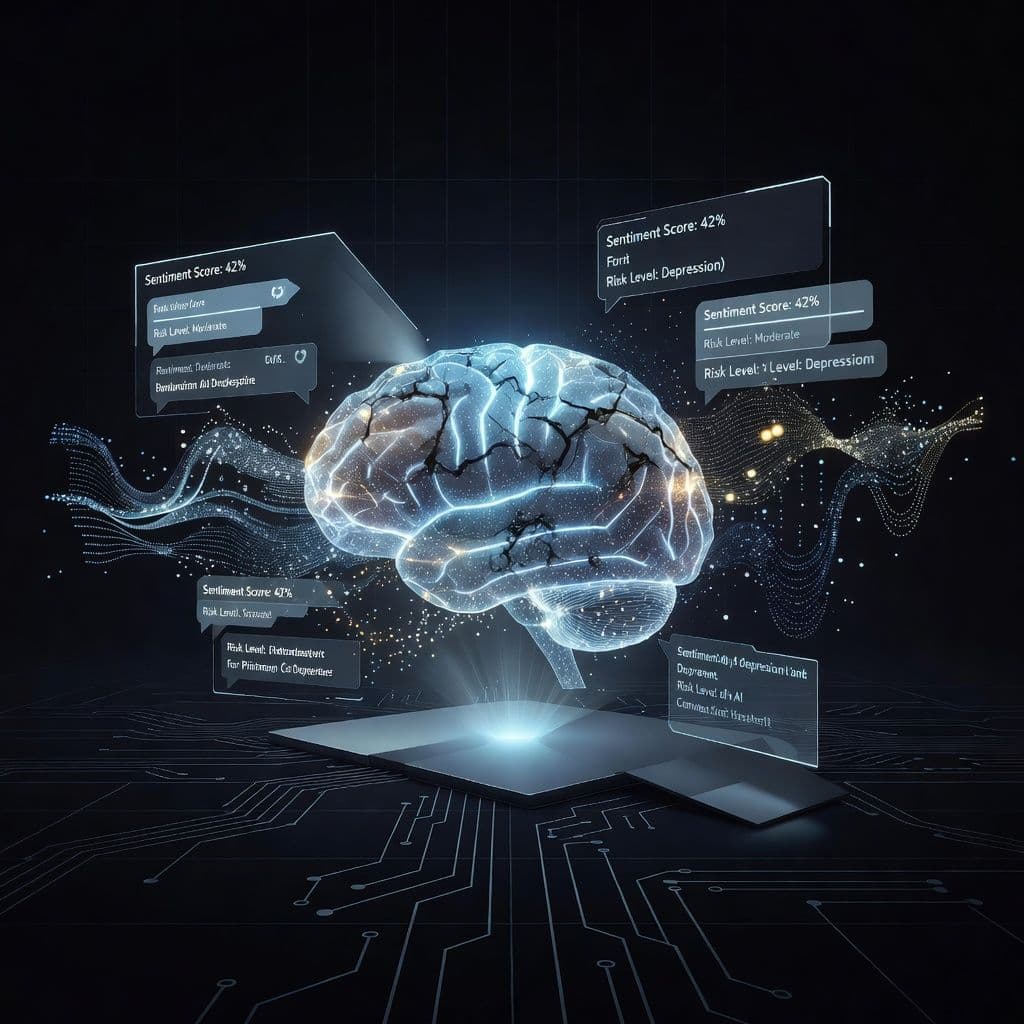
Researchers analyzed 1,108 audio-recorded primary care visits to train AI models that detect depression from naturalistic dialogue. The best-performing model, combining Sentence-BERT with logistic regression, achieved high accuracy in identifying patients with PHQ-9 confirmed depression.

The rapid expansion of AI data centers in a heavily polluted US city has stalled clean-air initiatives, despite environmental promises. Local officials struggle to balance economic growth with public health concerns.

Researchers introduce AgentGate, a new routing engine designed to solve dispatch inefficiencies in the emerging Internet of Agents. By replacing unrestricted text generation with structured candidate-aware routing, it optimizes latency, privacy, and cost.

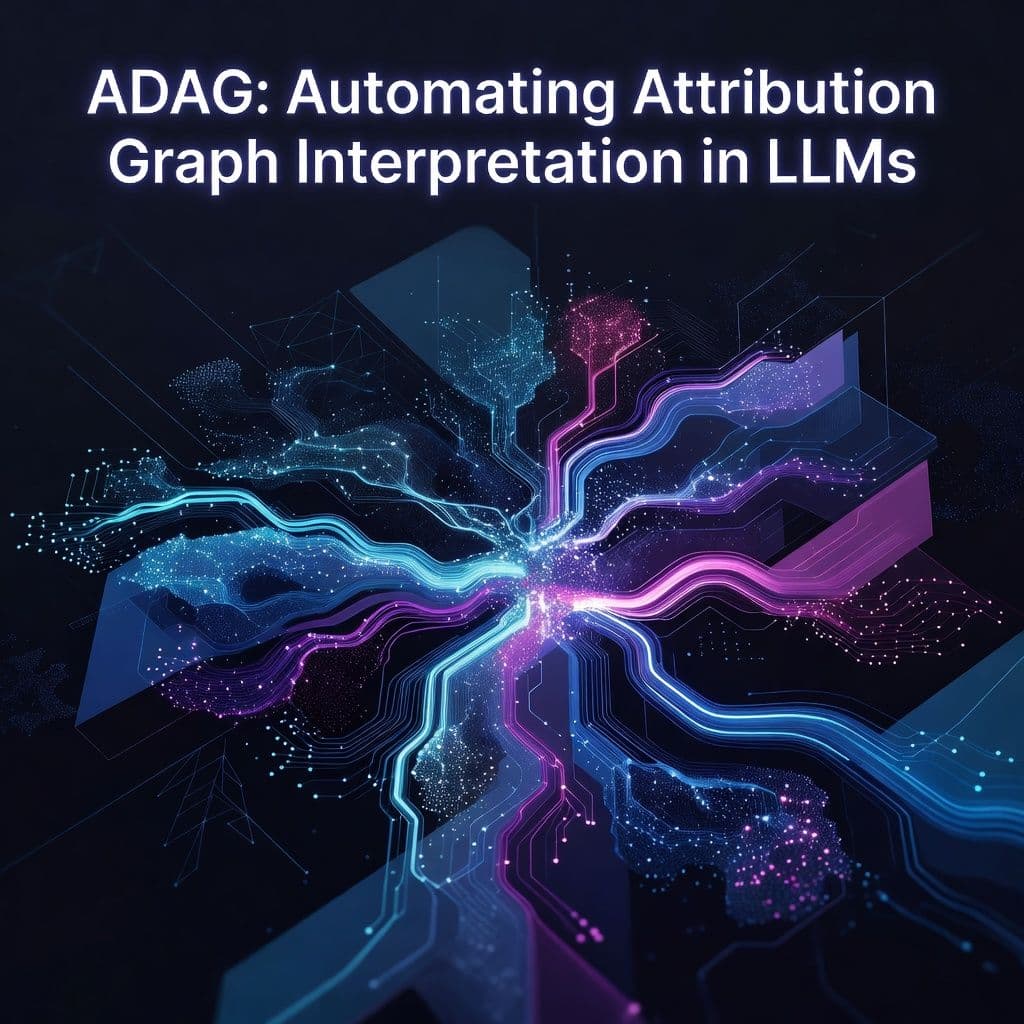
Researchers introduce ADAG, a new pipeline that automatically describes attribution graphs in language models, eliminating the need for manual circuit tracing. This shift promises to scale interpretability research by replacing ad-hoc human inspection with automated analysis.

Researchers propose a weak supervision framework to detect hallucinations in large language models. This approach enables hallucination detection from internal activations alone at inference time.
The Waymo Rule proposes guidelines for AI-generated code. It aims to ensure accountability and transparency in AI development.
Veo 3.1 Lite is a cost-effective video generation model now available in paid preview. It can be accessed through the Gemini API and tested in Google AI Studio.
The US AI build-out relies heavily on Chinese electrical parts. This dependence raises concerns about supply chain security and geopolitical implications.
Researchers propose a new approach to sequential clinical diagnosis using uncertainty-guided latent diagnostic trajectory learning. This method addresses the challenge of learning effective diagnostic trajectories under uncertainty.

Researchers estimated the state-space complexity of Shogi using the Monte Carlo method. The study aims to determine the number of reachable positions in the game.