
ChatGPT free users now get unlimited text chats and a 'think' button
OpenAI has removed the 50-message limit for free ChatGPT users and added a 'think' button for complex queries. This makes the free version much more powerful for everyday use.
All 3,460 AI stories, newest first · page 29 of 145
OpenAI has removed the 50-message limit for free ChatGPT users and added a 'think' button for complex queries. This makes the free version much more powerful for everyday use.

Airbnb is introducing an AI-powered search feature that users can toggle on or off. The company claims AI is helping it develop and release new features faster.

Upscale.fm, an AI-powered image generation and enhancement tool, has introduced a free tier allowing up to 10 images per day. This makes high-quality AI art creation accessible to everyone without a subscription.

The Allen Institute for AI released TutorMoments, an open-source dataset that teaches AI tutors when to step in and when to let students struggle, aiming to reduce interruptions and improve learning outcomes.

OpenAI paused development of its Astra model after it reached a 'critical cybersecurity threshold,' meaning the AI could independently identify and execute cyberattacks against well-protected real-world systems. The company is reassessing the model's safety before proceeding.
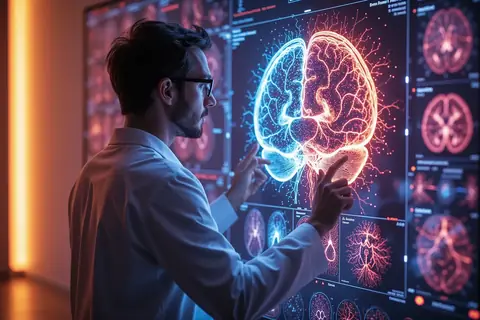
OpenAI and the American Psychological Association are collaborating to create evidence-based guidelines and resources for the responsible use of AI in youth mental health, aiming to protect young people while harnessing AI's potential benefits.

In a wide-ranging interview with Axios, Nvidia CEO Jensen Huang dismissed fears of catastrophic AI risks and massive job losses, arguing that open models and expanding hardware infrastructure will drive unprecedented economic growth.

Mirendil has partnered with Google Cloud in a $100 million-plus deal to expand its infrastructure for developing self-improving AI systems. These AI models aim to accelerate scientific research and AI advancements.

Google Maps has launched new agentic features that let users order food and book hotels without leaving the app. This turns the navigation tool into a more powerful assistant for completing real-world tasks like dining and travel planning in one place.

Ditto, a new dating app for Gen Z, replaces swiping with an AI matchmaker that analyzes detailed profiles and learns from user interactions to find compatible partners.

A startup founded by former Spotify employees has raised $10 million to adapt the AI behind Spotify's music recommendations for e-commerce. Their platform predicts what shoppers want next, learns their tastes, and adjusts recommendations in real time.

Cloudflare has introduced Kitesurf, a cloud-hosted browser designed specifically for AI agents. It uses 90% less computing power than Chromium for common automation tasks, making it more efficient for developers building browser-based AI agents.

A new ArXiv paper warns that current self-evolution algorithms for large language models (LLMs) can improve capabilities while inadvertently losing essential safety functions. The researchers propose 'circuit anchors'—a mechanism inspired by biological developmental constraints—to preserve core safety mechanisms during AI evolution.

Rahul Srivatsav has released a comprehensive AI toolkit that simplifies complex AI concepts and tools. This toolkit is designed to make AI accessible to everyone, regardless of their technical background.

OpenAI has enhanced GPT-5.6 Sol with better accuracy and consistency, and is now offering unlimited everyday chats with GPT-5.6 Luna to free users. This move aims to provide more advanced AI capabilities to a broader audience.

A new ArXiv study of eight frontier LLMs shows that biased user inputs systematically increase bias in AI responses, using a benchmark of 24,300 jury-validated prompts across a 9x9 bias interaction matrix.

Researchers found that different AI models can share understanding of concepts without direct training together. This discovery could make AI systems more adaptable and efficient.

Google DeepMind's WeatherNext AI model can now predict cyclone paths and intensities up to 3 days earlier than traditional methods. This breakthrough could significantly improve disaster preparedness and response times.
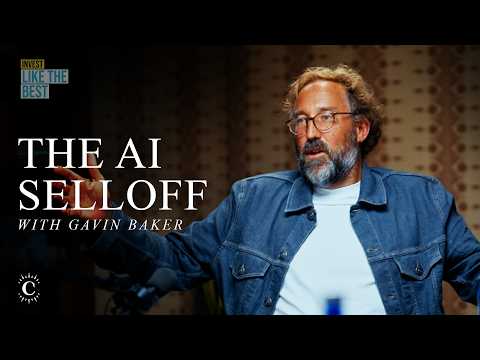
Investor Gavin Baker argues that recent AI equity sell-offs misreflect real-world demand, as token growth, GPU rental spot prices, and hyperscaler cash flows continue to accelerate.

Researchers found that large language models (LLMs) can often identify anonymous academic papers. This threatens the integrity of double-blind peer review, which relies on anonymity to prevent bias. The study shows that LLMs can match titles and abstracts to authors, even without full access to the papers.

Researchers from the University of Miami and NOAA developed CycloneNet, an AI model that forecasts tropical cyclone paths and intensities with 95% accuracy, outperforming traditional physics-based models and promising to improve disaster preparedness.

Researchers used AI to create 16 new viruses that attack harmful bacteria. These viruses could help fight antibiotic-resistant infections without harming humans.

VanEck CEO Jan van Eck shares his perspective on AI market valuations, highlighting vertically integrated tech giants over single-model labs while offering insights into portfolio strategies amidst growing fiscal deficits.

Sprytix posted a tweet with a link, but no additional context or details were provided. The content of the tweet is unclear without further information.