
New AI Memory Framework Helps LLMs Learn from Mistakes
Researchers developed a new memory system for AI that helps it learn from failures and improve over time. This could make AI assistants much better at complex, multi-step tasks.
All 3,460 AI stories, newest first · page 84 of 145
Researchers developed a new memory system for AI that helps it learn from failures and improve over time. This could make AI assistants much better at complex, multi-step tasks.

Researchers introduced DiBS, a new AI method that merges diffusion models with traditional logic to solve Sudoku more efficiently. This hybrid approach aims to overcome the limitations of pure learning-based or symbolic solvers.

Microsoft's AI CEO Mustafa Suleyman believes superintelligent AI is approaching but reassures that it won't replace human jobs. He emphasizes AI as a tool to augment human capabilities rather than replace them.

Terry Tao, a Fields Medal-winning mathematician, has become a leading advocate for integrating AI into mathematical research. He argues that AI can assist in discovering new patterns and solving problems that have long resisted human effort, potentially transforming how mathematics is done.

Researchers introduced Lean4Agent, a new method to make AI agents more reliable by using formal verification. This approach helps ensure AI agents follow correct steps in complex tasks, reducing errors in multi-step workflows.

Researchers created CrowdMath, a dataset of 164 expert-annotated math discussions showing how experts collaborate to solve open problems. This could help AI models learn from human reasoning processes, not just final answers.

Cerebrium launched Thalamus, a distributed router that ensures AI services run smoothly worldwide. This could make AI tools faster and more reliable for everyone.

Researchers introduced AEGIS, a system that uses a lightweight probe on a robot's activations to detect high-risk steps and switch to a stronger policy only when needed, preventing gradual failure in long-horizon manipulation tasks.

Sriram Krishnan, a key figure in shaping Trump's AI policy, is stepping down from his role. He plans to launch a new institution focused on continuing his work in AI policy. This move could significantly impact how AI regulations develop in the coming years.

Researchers discovered a new tracking method that analyzes SSD activity through JavaScript. This could let websites gather even more personal data without your knowledge.

The US government has invested heavily in quantum computing, but legal experts question the legality of the deal. This could impact the future of the quantum industry and research funding.
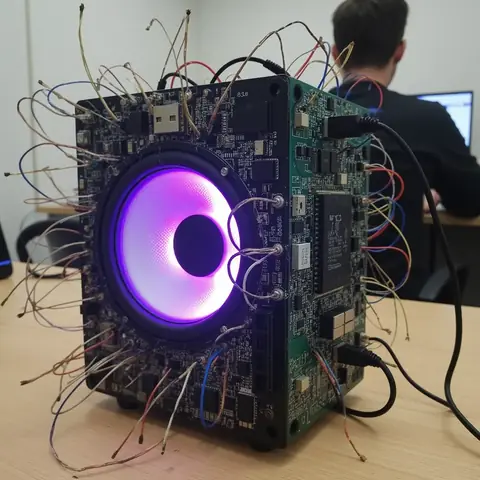
A popular USB-connected speaker can be hacked over the air to infect connected computers. The manufacturer doesn't consider this a security flaw.

The Trump administration is exploring deals to take an equity stake in OpenAI, aiming to benefit the American public from AI advancements. This move could significantly impact the AI industry and its global competition.

OpenAI has outlined its approach to AI policy, emphasizing transparency and support for thoughtful regulation. The company clarifies that no external groups speak on its behalf.

OpenAI is reportedly developing a 'super app' that could replace multiple specialized apps. This could change how we use AI in our daily lives, making it more integrated and seamless.

New York lawmakers have passed a one-year moratorium on new large data centers. This pause aims to assess the environmental and economic impact of these facilities on the state.

Meta has introduced a 'For You' feed in its standalone AI app that is entirely filled with AI-generated clickbait articles. The topics, images, and text are all created by AI, raising questions about misinformation and the blurring line between real and fake news.

AI agents are becoming more powerful, but their terminology can be confusing. Understanding key terms like 'harness' and 'scaffold' helps clarify how these tools work and what they can do. These concepts are crucial for both developers and users to grasp as AI agents evolve.

Hugging Face has released a new command-line interface (CLI) designed to streamline interactions with their AI model Hub. This tool makes it easier for developers and AI enthusiasts to manage models and datasets directly from their terminal.

PyTorch's torch.profiler helps you find performance bottlenecks in your AI code. It's a powerful tool for developers, even if you're new to optimization.

Google published exploit code for a vulnerability in Chromium that was reported over three years ago. The bug has now been fixed, but the exploit code was released before the patch was available, putting millions of users at risk. The company claims it's a rare exception to policy.

Red Hat has confirmed that multiple packages in its official NPM channel were backdoored, and anyone who has downloaded the affected packages should investigate immediately. The attack is a supply chain compromise through the company's own official npm channel.

Dashlane has explained how attackers managed to download encrypted password vaults by targeting many users at once, increasing their odds of success. The company says no master passwords were compromised, but the incident underscores the importance of strong security practices.

A newly discovered zero-day exploit completely defeats Windows 11's default BitLocker encryption. Microsoft says it's investigating but has not yet provided a fix. The exact mechanism is unclear, but the flaw could leave millions of users vulnerable to data theft.