NVIDIA Fine-Tunes Cosmos Predict 2.5 for Robot Video Generation
Summarized by AI from reporting by Hugging Face Blog, published under our editorial policy.
NVIDIA has fine-tuned its Cosmos Predict 2.5 model to generate realistic robot videos. This advancement could revolutionize robot training and simulation.
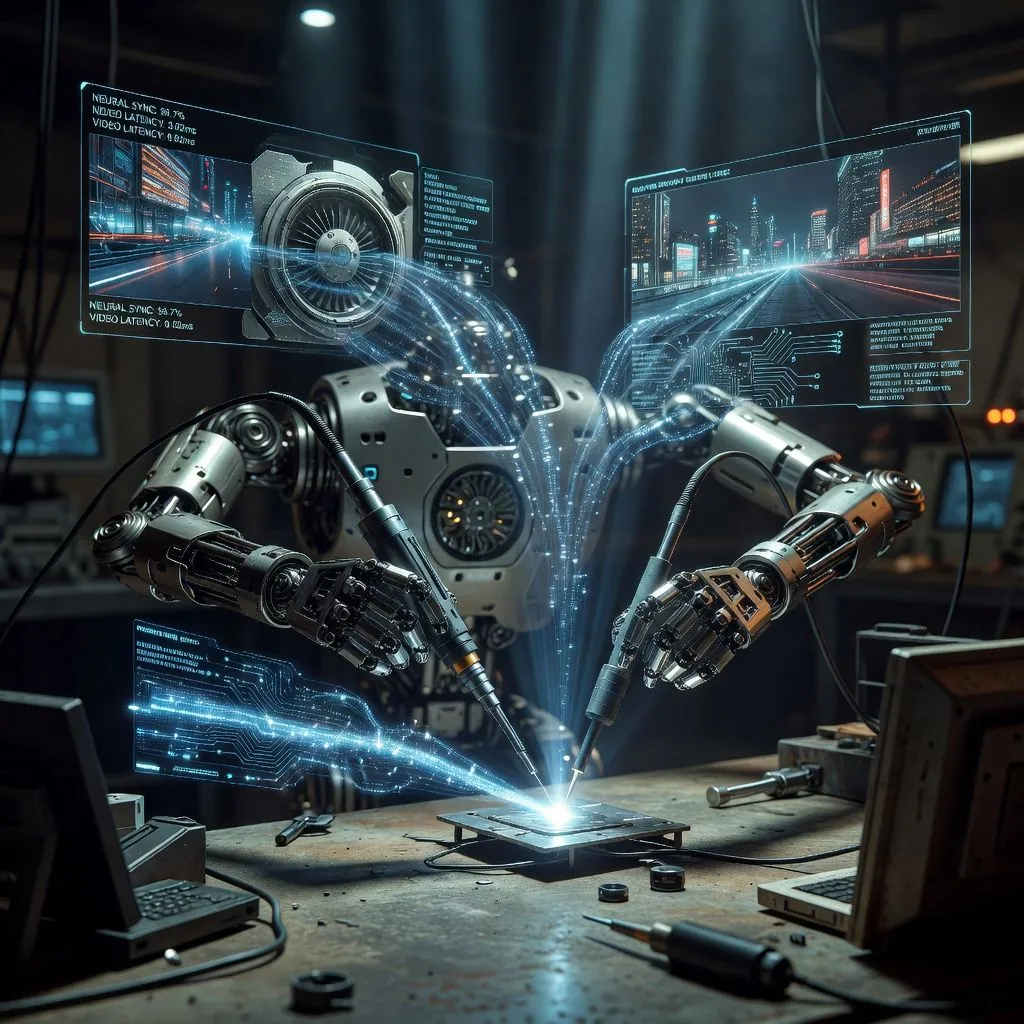
NVIDIA has fine-tuned its Cosmos Predict 2.5 model to generate realistic robot videos using LoRA and DoRA techniques. LoRA (Low-Rank Adaptation) and DoRA (Dynamic Rank Adaptation) are methods that allow models to be adapted for specific tasks without extensive retraining. This fine-tuning enables the model to create highly accurate simulations of robot movements and interactions.
This breakthrough is significant because it allows researchers and developers to simulate robot behaviors in various environments without physical robots. Imagine training a robot to navigate a complex warehouse or perform delicate surgery—all in a virtual space. This could drastically reduce the time and cost associated with robot training.
If you're interested in exploring this technology, you can visit the Hugging Face blog for detailed instructions on how to fine-tune Cosmos Predict 2.5 using LoRA and DoRA. The blog provides step-by-step guides and code examples to get you started.