Developer Runs 56M-Parameter AI Model Across Three ESP32-S3 Boards Using ESP-NOW
Summarized by AI from reporting by Hacker News AI, published under our editorial policy.
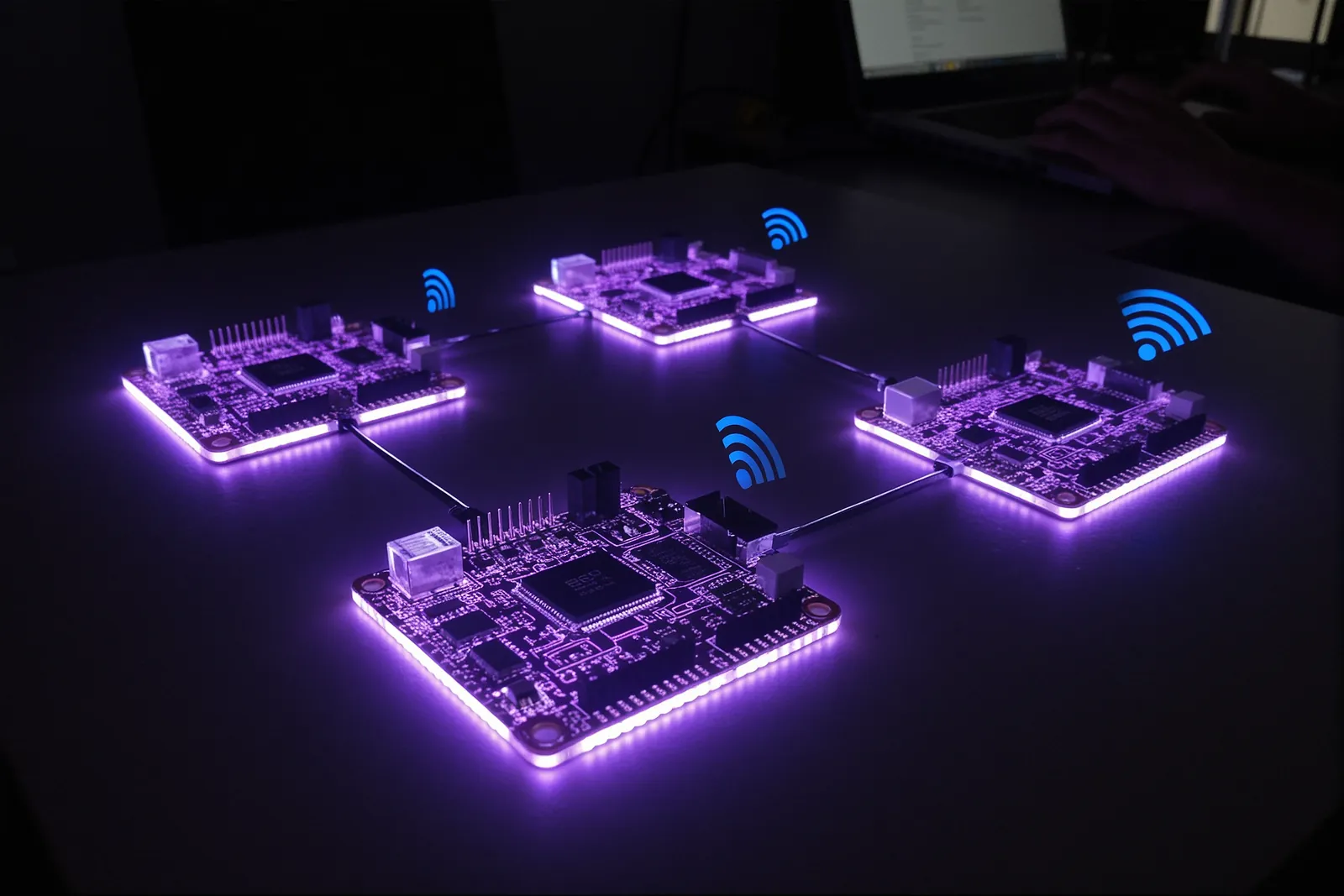
Developer Wladimir Avila distributed a 56-million-parameter AI model across three ESP32-S3 microcontrollers using the ESP-NOW wireless protocol, demonstrating low-cost distributed AI on hobbyist hardware.
Key takeaways
- Developer Wladimir Avila distributed a 56-million-parameter AI model across three ESP32-S3 boards using the ESP-NOW wireless protocol.
- The ESP32-S3 boards are low-cost microcontrollers with dual-core 32-bit LX6 processors and 512KB of RAM.
- The project demonstrates that advanced AI models can run on low-cost, readily available hobbyist hardware through distributed computing.
Developer Wladimir Avila has successfully run a 56-million-parameter AI model across three ESP32-S3 boards using ESP-NOW, a wireless communication protocol. This achievement showcases the potential for low-cost, distributed AI on tiny devices, making advanced AI capabilities more accessible to hobbyists and DIY enthusiasts.
Distributed AI on Three ESP32-S3 Boards
Avila distributed a 56-million-parameter AI model across three ESP32-S3 boards — small, low-cost microcontrollers popular in DIY electronics projects. Using ESP-NOW, a wireless protocol that enables direct device-to-device communication without a central router, the boards work together as a single, more powerful unit. This approach distributes computational tasks, making it possible to run larger AI models on hardware that would otherwise be too limited.
Hardware Specifications and Communication Protocol
The ESP32-S3 boards used in this project are equipped with dual-core 32-bit LX6 processors and 512KB of RAM. Each board runs a portion of the AI model, and the ESP-NOW protocol enables them to communicate and coordinate their tasks wirelessly. This setup effectively creates a small, distributed computing network capable of handling more complex AI tasks than a single board could manage alone. Avila's GitHub repository provides detailed instructions and code for replicating the setup, making it accessible to others interested in experimenting with distributed AI on low-cost hardware.
Implications for Hobbyists and DIY AI
This project demonstrates that advanced AI capabilities can be achieved using low-cost, readily available hardware. For hobbyists and DIY enthusiasts, this means they can experiment with AI models that were previously out of reach due to hardware limitations. It also highlights the potential for AI to be integrated into a wider range of devices, from smart home gadgets to educational tools, making AI more accessible and versatile. This could lead to innovative applications in areas like home automation, robotics, and educational projects.
How to Get Started
If you're interested in trying this out, you can visit Avila's GitHub repository at https://github.com/wladimiravila/esp32s3-distributed-ai. The repository includes detailed instructions and code to help you set up a similar distributed AI system using ESP32-S3 boards. This is a great opportunity to explore the capabilities of low-cost hardware and see how far you can push the boundaries of AI on tiny devices.
Frequently asked
- What is ESP-NOW?
- ESP-NOW is a wireless communication protocol designed for low-power devices that allows multiple devices to communicate directly without a central router or access point, making it ideal for distributed computing tasks.
- Do I need to be an expert to try this project?
- While some familiarity with electronics and programming is helpful, the detailed instructions and code provided in the GitHub repository make it accessible to hobbyists and DIY enthusiasts.
- What size AI model can I run with this setup?
- The source demonstrates a 56-million-parameter model distributed across three boards, but does not specify the maximum model size possible with this approach.