AI Leaders Clash Over Open Weights as OpenAI and Anthropic Team Up for Washington Lobbying
Summarized by AI from reporting by Peter H. Diamandis, published under our editorial policy.
Nvidia CEO Jensen Huang launched an initiative championing open-weight AI models, prompting a sharp response from Anthropic's Dario Amodei as top frontier labs join forces to push for federal review processes in Washington.
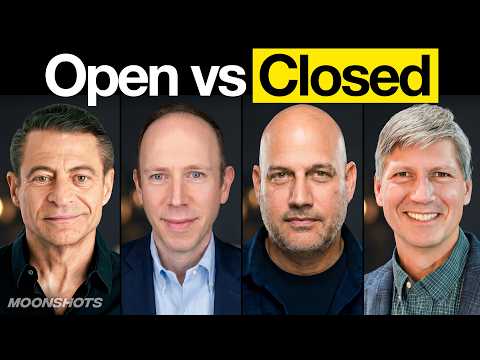
An escalating debate over open-source artificial intelligence has taken center stage in Silicon Valley and Washington following Nvidia CEO Jensen Huang’s public letter advocating for open-weight frontier models. Signed by 77 organizations, Huang's statement launched the Open Secure AI Alliance, arguing that open models strengthen cybersecurity, enable national sovereignty, and accelerate global innovation. In response, Anthropic CEO Dario Amodei rejected accusations that his firm opposes open weights, reframing the core challenge around stopping authoritarian states from reaching frontier capabilities and mitigating biosecurity risks. Amodei advocated for tighter chip export controls, crackdowns on mass model distillation, and mandatory safety testing for all powerful systems.
### Joint Lobbying and Rapid Model Deployments Despite their intense market rivalry, Anthropic and OpenAI have reportedly aligned on back-channel lobbying efforts in Washington ahead of upcoming federal regulatory deadlines. The two labs are seeking a unified framework that includes a federal review process and a voluntary 30-day government review window before releasing models with advanced cyber or security capabilities. Commentators note this regulatory push coincides with aggressive open-source progress globally, exemplified by the release of Moonshot AI's Kimi K3 model on Hugging Face, which recorded approximately 100,000 downloads within 24 hours while demonstrating major architectural changes to attention mechanisms.
### Geopolitical Realities and AI Diplomacy The domestic policy debate mirrors broader geopolitical shifts, as China actively exports open AI models and computing infrastructure across the Global South as an instrument of statecraft. Industry analysts warn that if US policy stifles open-weight developments, foreign ecosystems will quickly fill the void in developing markets. As model development continues at a hyper-exponential pace—highlighted by Anthropic's release of Claude Opus 5—the tension between open ecosystem security and proprietary safety regulation remains a central conflict for the industry's future.