OpenAI Report: How ChatGPT Powers Continuous Learning for Students and Educators
Summarized by AI from reporting by OpenAI Blog, published under our editorial policy.
OpenAI's new report details how students and educators use ChatGPT for personalized study aids, lesson planning, and language practice, making learning a continuous process beyond the classroom.
Key takeaways
- ChatGPT is used by students for personalized study aids, homework help, and practice questions.
- Educators use ChatGPT to create lesson plans, teaching materials, and quizzes efficiently.
- The tool supports continuous learning by providing immediate help and resources beyond the classroom.
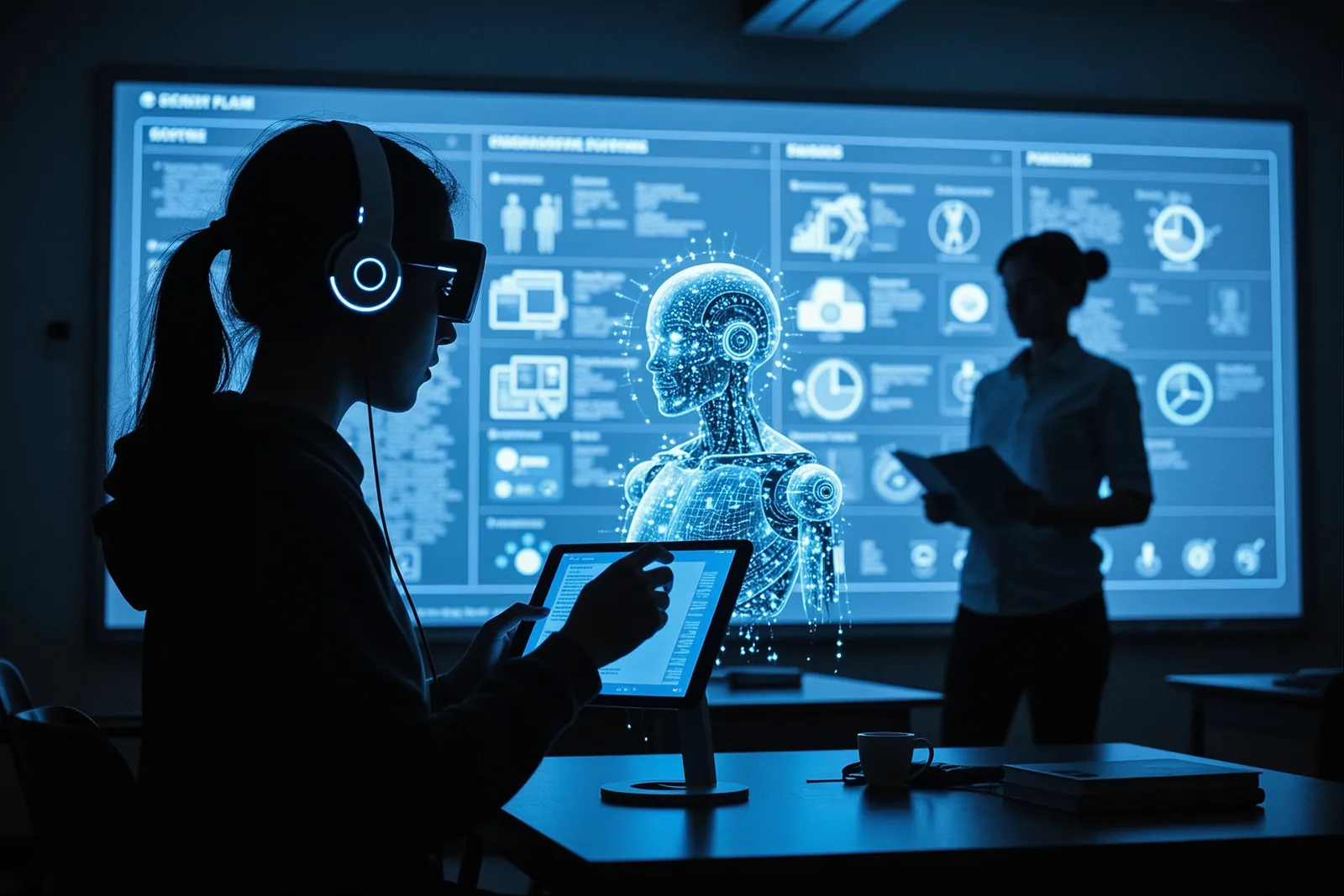
OpenAI released a new report detailing how students and educators are using ChatGPT to make learning a continuous process. The report highlights the tool's role in providing support that extends beyond traditional classroom settings.
ChatGPT as a personalized study aid and lesson-planning tool
OpenAI’s report shows that ChatGPT is being used in various ways to facilitate continuous learning. For students, the tool acts as a personalized study aid, helping with homework, explaining complex concepts, and providing practice questions. Educators, on the other hand, use ChatGPT to create lesson plans, develop teaching materials, and even get feedback on their teaching methods.
Concrete examples: breaking down subjects and generating quizzes
The report includes several concrete examples of how ChatGPT is being integrated into learning routines. Students report using the tool to break down difficult subjects into more digestible parts, while educators appreciate its ability to generate quizzes and worksheets quickly. The tool is also being used to provide language practice, with students engaging in conversational exercises to improve their language skills.
Bridging the gap between formal education and real-world application
For students, ChatGPT offers a way to get immediate help with their studies, regardless of the time or place. This is particularly beneficial for those who may not have access to tutors or additional resources. For educators, the tool provides a way to streamline their workload, allowing them to focus more on teaching and less on administrative tasks. This shift towards continuous learning can help bridge the gap between formal education and real-world application.
Getting started with ChatGPT for learning
If you're a student or educator looking to incorporate ChatGPT into your learning routine, the first step is to open the ChatGPT interface and start exploring its capabilities. Try asking it to explain a complex concept in a simpler way, or request a practice quiz on a specific topic. Educators can experiment with generating lesson plans or creating interactive activities. OpenAI also provides a range of resources and examples on their website to help you get started.
Frequently asked
- Is ChatGPT free for students and educators?
- The OpenAI report does not specify pricing details for ChatGPT.
- Can ChatGPT replace traditional teaching methods?
- The report does not claim that ChatGPT can replace traditional teaching methods; it describes the tool as a supplement to enhance learning.