AGI Capabilities and Agentic Workflows Signal Structural Shift Toward Exponential Growth
Summarized by AI from reporting by Jordi Visser, published under our editorial policy.
As advanced AI architectures like Astra showcase multi-agent problem solving, economic focus is shifting from traditional macro indicators to compute-driven productivity. The emergence of autonomous agents is simultaneously reframing hardware economics and accelerating the convergence of capital markets with digital infrastructure.
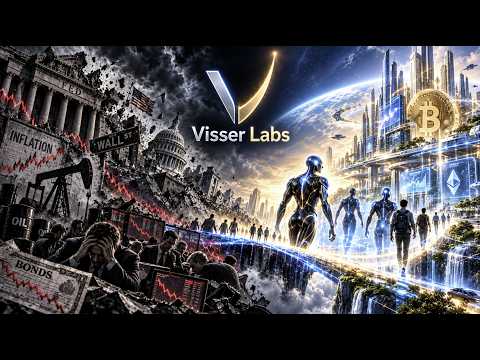
Traditional economic indicators such as Federal Reserve rate decisions, bond yield fluctuations, and oil prices are increasingly giving way to an exponential growth model driven by artificial intelligence capex and compute deployment. The release of advanced architectures like Astra—trained on vast GPU clusters and capable of deploying thousands of autonomous agents in parallel—illustrates how compute is actively converting into domain-specific intelligence. Recent benchmarks demonstrate multi-agent systems solving long-standing computational challenges like the Navier-Stokes equations, signaling a fundamental shift where GDP growth is anchored by digital labor and accelerating productivity rather than legacy industrial metrics.
Hardware Economics and Autonomous Workflows
This technical transition is altering corporate finance assumptions around AI infrastructure. Despite traditional accounting models projecting steep hardware depreciation, rental rates for high-performance GPUs such as NVIDIA's H100 have remained flat or increased due to persistent compute shortages. This sustained demand enhances cloud provider cash flows while lowering relative debt issuance needs. Simultaneously, accessible public code repositories and standardized prompting structures allow non-technical operators to build custom agentic systems, democratizing capabilities in areas like quantitative research, trading strategy backtesting, and automated enterprise workflows.
Convergence of Capital Markets and On-Chain Infrastructure
As autonomous software agents proliferate, brokerage platforms and blockchain networks are adjusting to support programmatic interactions. Brokerages including Robinhood, Mumu, and Interactive Brokers are moving toward agentic investing interfaces and expanded API capabilities to accommodate algorithmic execution. In tandem, smart-contract platforms like Ethereum and emerging layer-2 environments are providing the tokenization framework and execution rails necessary for automated asset management, pointing to a future market structure defined by network-level utility and verifiable digital trust.