Asclepius: A New Framework for Testing Long-Term AI Performance in Emergency Care
Summarized by AI from reporting by ArXiv cs.AI, published under our editorial policy.
Researchers introduced Asclepius, a framework that uses the Clinical Environment Simulator (CES) to test AI agents over entire emergency-department shifts. Current AI agents often fail to complete tasks despite correct diagnoses, highlighting gaps in real-world readiness.
Key takeaways
- Asclepius is a new framework designed to test AI agents in long-term, complex scenarios using the Clinical Environment Simulator (CES).
- Current AI agents often fail to complete tasks despite correct diagnoses, highlighting gaps in real-world readiness.
- The research emphasizes the need for AI agents that can handle long-horizon tasks effectively in healthcare settings.
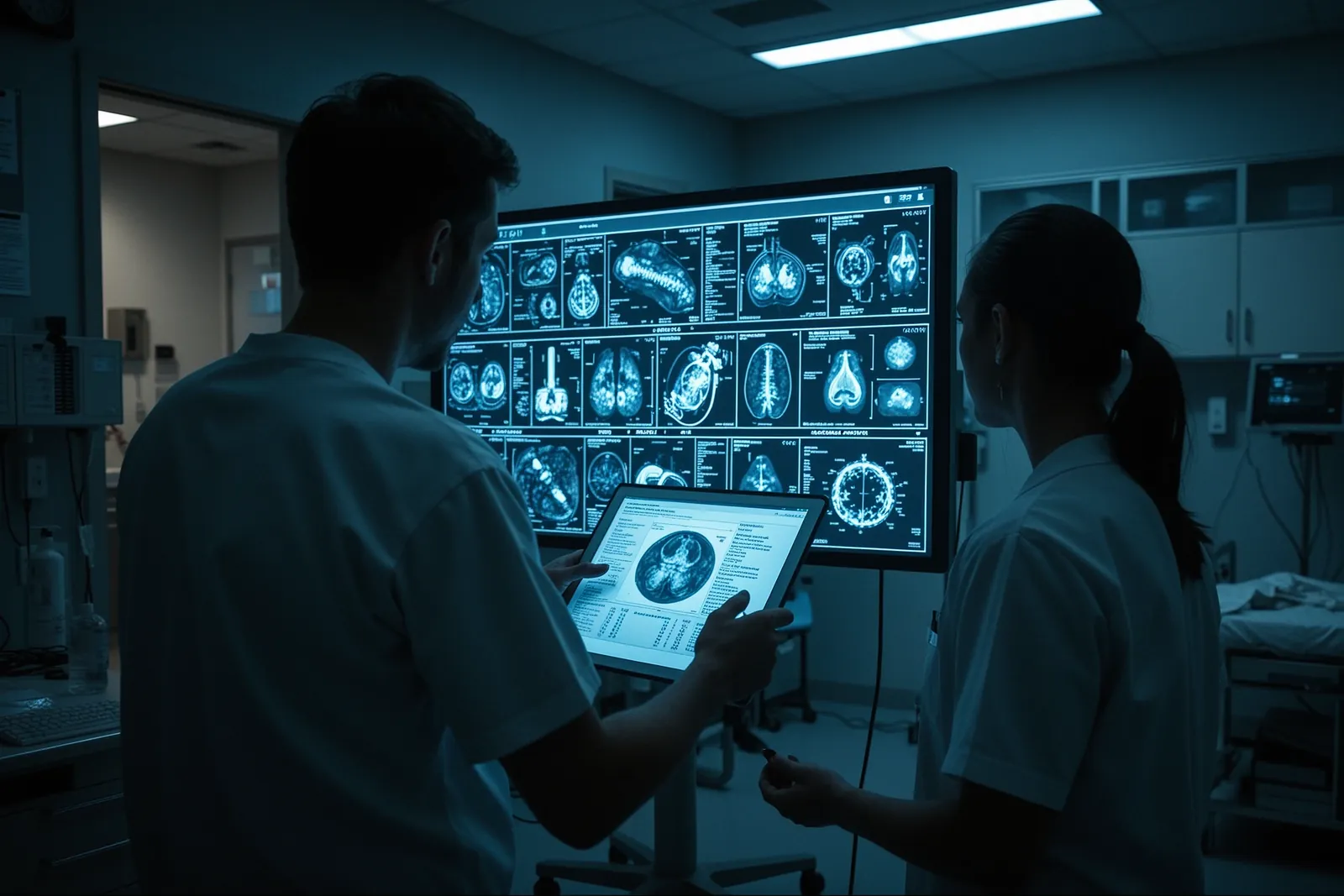
Researchers introduced Asclepius, a new framework designed to evaluate the performance of AI agents in long-term, complex scenarios, particularly in emergency room settings. The framework uses the Clinical Environment Simulator (CES) to test AI agents' ability to manage an entire emergency-department shift under continuous time and resource pressure. This approach reveals failures that are not apparent in short, single-task benchmarks.
How Asclepius Tests AI Agents in the Clinical Environment Simulator
Asclepius tests AI agents in the Clinical Environment Simulator (CES), a virtual environment that simulates the demands of an emergency department. Unlike traditional benchmarks that focus on short, single-task scenarios, Asclepius evaluates agents over extended periods, measuring their performance in a structured, multi-dimensional grading system. This includes assessing the agent's ability to diagnose correctly and complete all necessary tasks to treat a patient.
Key Findings: Correct Diagnoses but Incomplete Treatment
The study found that current AI agents can often diagnose correctly but fail to deliver complete treatment. For example, an agent might correctly identify a patient's condition but fail to order necessary tests or follow-up treatments. These failures highlight the need for AI agents that can handle long-horizon tasks effectively. The research emphasizes that real-world deployments of AI agents require robustness and adaptability over extended periods, which current models lack.
Why This Research Matters for Healthcare AI
This research is crucial for the future of AI in healthcare. Imagine an AI assistant that can manage an entire emergency room shift, from diagnosing patients to ordering tests and treatments. Asclepius helps ensure that these AI agents are reliable and can handle the complexities of real-world scenarios. This could lead to faster, more accurate medical care and reduce the burden on human healthcare workers. Ultimately, this technology aims to improve patient outcomes and streamline emergency room operations.
How to Stay Informed About AI in Healthcare
While Asclepius is a research framework and not yet available for public use, you can stay informed about advancements in AI and healthcare. Follow reputable sources like ArXiv and research institutions that focus on AI in healthcare. Additionally, if you are interested in AI applications in healthcare, consider exploring open-source projects or participating in online forums that discuss the latest developments in this field.
Frequently asked
- Is Asclepius available for public use?
- No, Asclepius is currently a research framework and not available for public use.
- How does Asclepius differ from traditional AI benchmarks?
- Asclepius evaluates AI agents over extended periods in complex scenarios, unlike traditional benchmarks that focus on short, single-task scenarios.
- What is the Clinical Environment Simulator (CES)?
- The Clinical Environment Simulator (CES) is a virtual environment that simulates the demands of an emergency department, used to test AI agents' performance.