Astra and Opus AI Models Decrypt WWII Enigma Machine Ciphers
Summarized by AI from reporting by TechCrunch AI, published under our editorial policy.
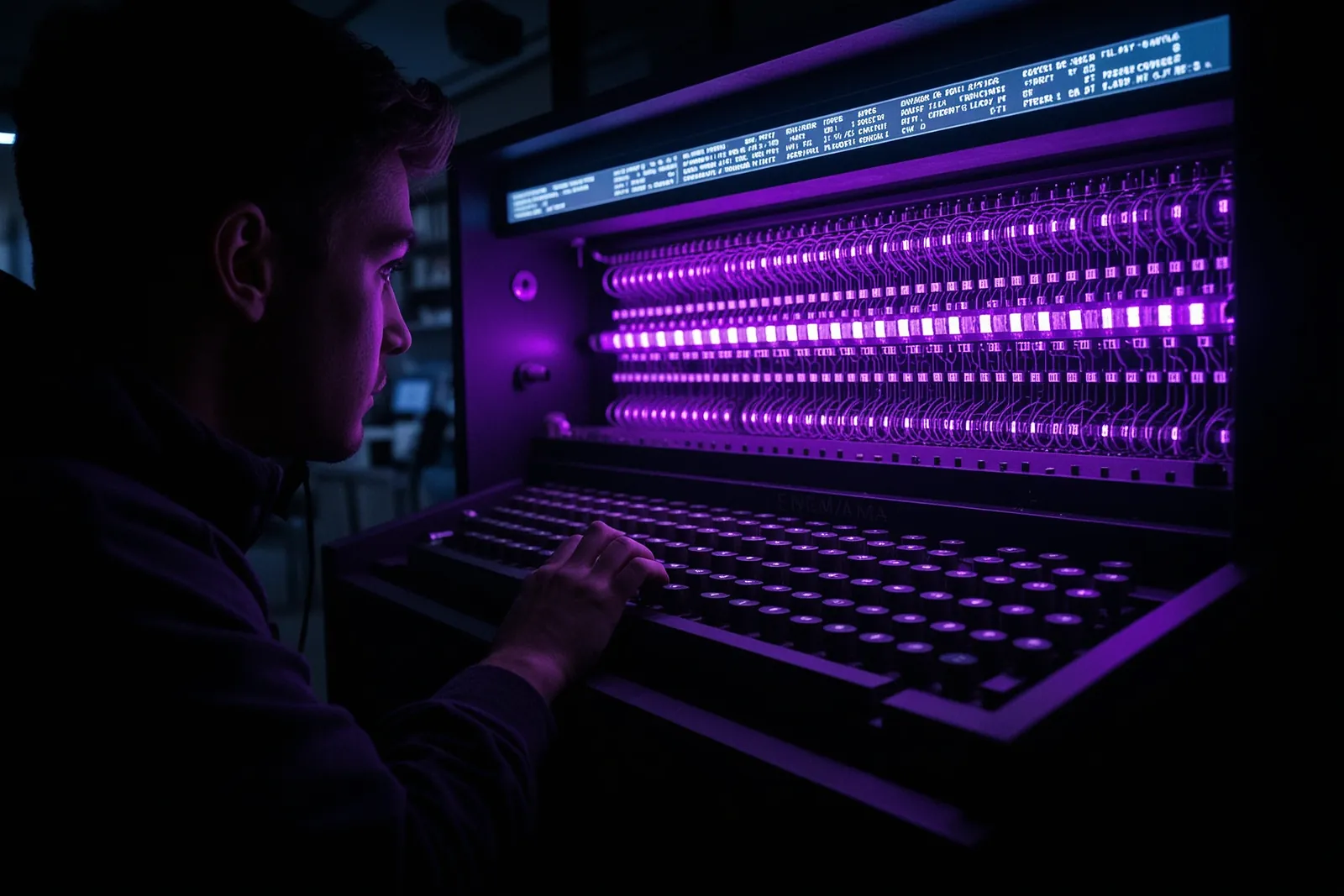
Astra and Opus, two leading AI models, have successfully decrypted messages from the WWII Enigma machine, completing a task that stumped even Alan Turing. This breakthrough highlights the advanced capabilities of modern AI in solving complex historical puzzles.
Key takeaways
- Astra and Opus AI models have successfully decrypted messages from the WWII Enigma machine.
- This achievement completes a task that was partially solved by Alan Turing and his team during World War II.
- The breakthrough highlights the advanced capabilities of modern AI in solving complex historical puzzles.
Astra and Opus, two cutting-edge AI models, have successfully decrypted messages from the WWII Enigma machine, a feat that even Alan Turing could not fully achieve during his lifetime. The Enigma machine, used by Nazi Germany to encrypt secret communications, was a formidable challenge that required advanced codebreaking techniques.
AI Models Crack Unsolved Enigma Messages
Astra and Opus, developed by leading AI research teams, have demonstrated their ability to crack the Enigma machine's complex ciphers. This achievement is significant because it completes a task that was partially solved by Turing and his team at Bletchley Park during World War II. The AI models used advanced machine learning techniques to analyze patterns in the encrypted messages, ultimately deciphering them with high accuracy.
How This Compares to Turing's Original Work
During World War II, the Enigma machine was considered unbreakable due to its complex encryption methods. Turing and his team developed early computational techniques to decrypt Enigma messages, which played a crucial role in the Allied victory. However, some messages remained undeciphered until now. Astra and Opus have not only replicated Turing's work but have also surpassed it by successfully decrypting messages that were previously unsolved.
Why This Matters for Everyday AI Applications
This breakthrough is a testament to the incredible advancements in AI technology. It shows that modern AI models can solve problems that were once thought unsolvable, even by the brightest minds of the past. For everyday people, this means that AI can be used to tackle a wide range of complex issues, from medical research to climate modeling, ultimately improving our quality of life.
Exploring AI Tools Available Today
While you may not have access to Astra or Opus directly, you can explore other AI tools that are publicly available. For example, you can try using AI-powered translation tools like DeepL or Google Translate to experience the power of modern AI in action. These tools use similar machine learning techniques to those employed by Astra and Opus, albeit on a smaller scale.
Additionally, you can learn more about the history of codebreaking and the Enigma machine by visiting the National Cryptologic Museum or exploring online resources. Understanding the past can help you appreciate the advancements we are making today.
Frequently asked
- Are Astra and Opus publicly available for use?
- No, Astra and Opus are not publicly available for use. They are advanced AI models developed by leading research teams.
- How did Astra and Opus decrypt the Enigma messages?
- Astra and Opus used advanced machine learning techniques to analyze patterns in the encrypted messages, ultimately deciphering them with high accuracy.
- Can I try similar AI tools today?
- Yes, you can try using AI-powered translation tools like DeepL or Google Translate to experience the power of modern AI in action.