U.S.-Banned Nvidia Chips Power China’s Leading AI Models
Summarized by AI from reporting by TechCrunch AI, published under our editorial policy.
Chinese AI companies are using restricted Nvidia Blackwell GPUs to train advanced models, despite U.S. export bans. This undermines the U.S. strategy to limit China’s AI capabilities. Research shows these chips are likely being used in offshore data centers, complicating enforcement.
Key takeaways
- Chinese AI companies are using U.S.-banned Nvidia Blackwell GPUs to train advanced models.
- Research shows these chips are likely being used in offshore data centers, particularly in Malaysia.
- The use of these banned chips undermines U.S. export controls aimed at limiting China’s AI capabilities.
- About two million advanced chips entered China in 2024 and 2025 through schemes designed to hide their final destination.
- The Georgetown Center for Security and Emerging Technology provides insights into U.S.-China technology policy.
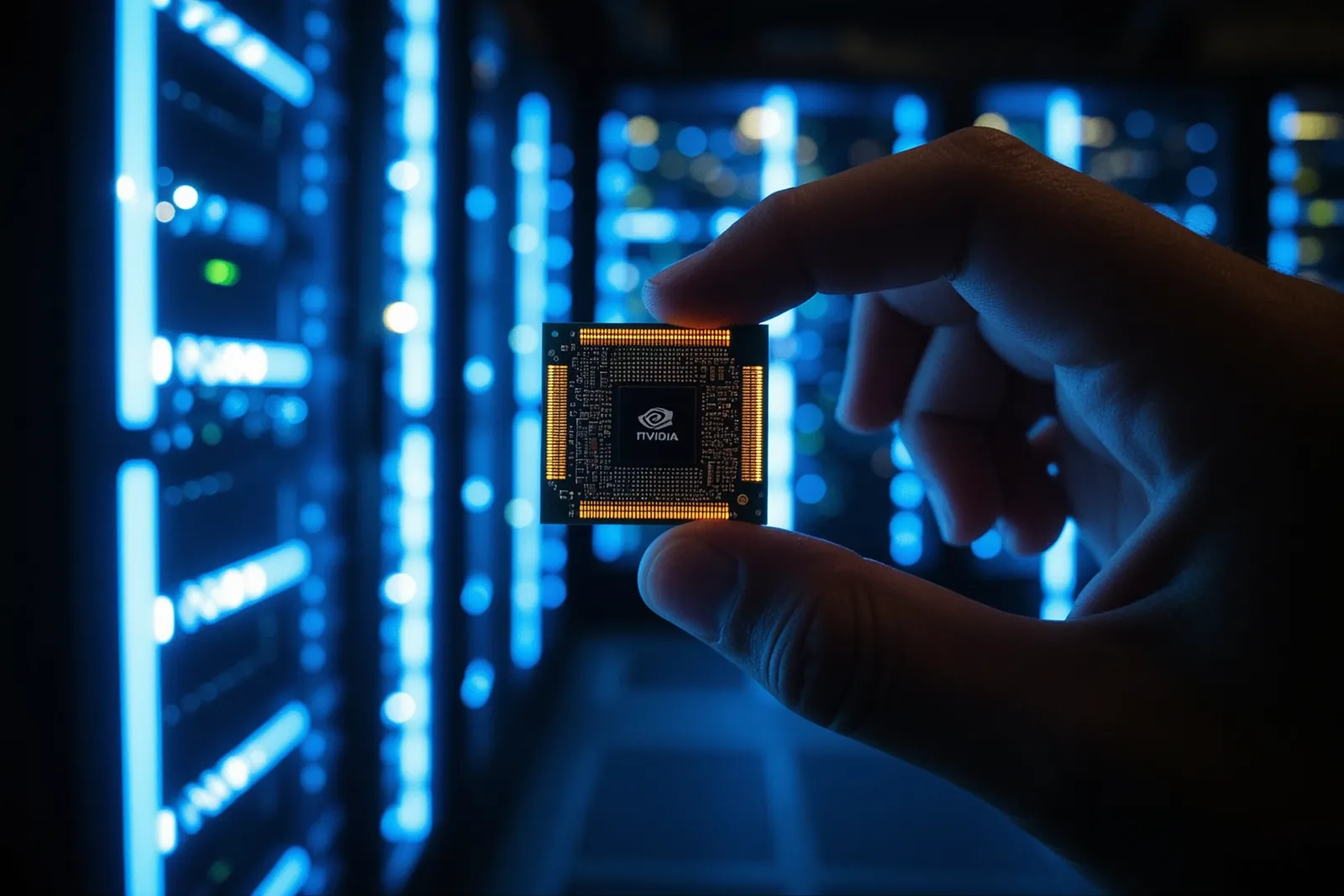
Nvidia’s Blackwell GPUs, banned from export to China, are being used to train some of China’s most advanced AI models, according to new research. The findings highlight a significant loophole in U.S. export controls aimed at restricting China’s access to cutting-edge technology. These models, developed by Chinese companies like DeepSeek, Moonshot AI, MiniMax, and Ant Group, show clear signs of being trained on Nvidia’s restricted chips.
The Research Behind the Discovery
Will DePue, a former OpenAI researcher leading the nonprofit Unemployment Labs, analyzed the weights of these AI models. The unique structure of these models, known as weights, reflects the configurations of the chips used to train them. DePue found compelling evidence that models like Moonshot’s Kimi’s K3 and DeepSeek’s V4 were trained on Nvidia’s Blackwell GPUs, which are banned from export to China. This research aligns with earlier claims by White House technology adviser Michael Kratsios, who cited U.S. intelligence sources stating that Moonshot had used export-banned Nvidia chips.
Nvidia’s Blackwell GPUs are the latest generation of AI accelerators, designed to handle the most demanding AI workloads. They are significantly more powerful than the previous generation of chips, such as the H200, which is still allowed for export to China under certain conditions. The use of these banned chips in China’s leading AI models suggests that Chinese companies are finding ways to bypass U.S. export controls, despite the intended restrictions.
How Are These Chips Getting into China?
The research suggests that these chips are likely being used in offshore data centers, particularly in Malaysia. Epoch AI, a nonprofit research organization, estimates that about two million advanced chips entered China in 2024 and 2025 through schemes designed to hide their final destination. Additionally, 275,000 Nvidia AI accelerators were imported to Malaysia in the same period. This practice allows Chinese firms to access powerful AI chips without directly violating export controls, as the chips are technically not in China.
This strategy of using offshore data centers has become a popular way for Chinese firms to access compute power. Malaysia, in particular, has seen an industrial revolution driven by the demand for AI chips. The country has become a hub for data centers that serve Chinese companies, providing them with the computational resources they need to train advanced AI models.
The Broader Implications for U.S. and China
The use of these banned chips undermines the U.S. strategy to limit China’s AI capabilities. The export controls were intended to protect the U.S. leadership in AI by preventing China from accessing the most advanced chips. However, the widespread use of these chips in offshore data centers shows that the controls are not effectively stopping China from advancing its AI technology. This could have significant implications for the global AI landscape, as China continues to develop powerful AI models despite U.S. restrictions.
The situation is further complicated by the personal and professional entanglements of Nvidia’s former CEO, Jensen Huang. Huang recently left the company after admitting to an affair with Alice Huang, executive of Megaspeed, a company implicated in smuggling Nvidia chips into China. Alice Huang has also been alleged to be an agent of China’s intelligence service. These entanglements raise questions about Nvidia’s potential corporate liability for export control violations and the effectiveness of U.S. export controls overall.
What You Can Do Today
If you are concerned about the implications of these findings, you can stay informed about U.S. export policies and their impact on global AI development. Follow updates from organizations like the Georgetown Center for Security and Emerging Technology, which provides insights into U.S.-China technology policy. Additionally, you can explore AI models from companies that comply with U.S. export controls to ensure you are using technology that aligns with your values and legal standards.
For those interested in the technical aspects, you can also look into the configurations of AI models and the chips used to train them. Understanding the unique structures of these models can provide insights into the technologies being used and the strategies employed to bypass export controls. This knowledge can help you make informed decisions about the AI technologies you use and support.
Frequently asked
- Are these AI models entirely trained on Nvidia chips?
- No, the models may have been trained on a mix of chips, but they show clear signs of being trained on Nvidia’s Blackwell GPUs, which are banned from export to China.
- How are these banned chips getting into China?
- These chips are likely being used in offshore data centers, particularly in Malaysia, allowing Chinese firms to access powerful AI chips without directly violating export controls.
- What is the impact of these findings on U.S. export controls?
- The findings highlight a significant loophole in U.S. export controls, showing that the controls are not effectively stopping China from advancing its AI technology.
- What can I do to stay informed about U.S. export policies?
- You can follow updates from organizations like the Georgetown Center for Security and Emerging Technology, which provides insights into U.S.-China technology policy.