
Indian Tech Tycoon Invests $30M to Build AI Office Rival
Bhavin Turakhia is funding Neo, an AI-powered alternative to Microsoft Office and Google Apps. This venture could shake up how businesses handle documents and productivity tools.
830 stories curated by AInformed · page 14 of 35
Bhavin Turakhia is funding Neo, an AI-powered alternative to Microsoft Office and Google Apps. This venture could shake up how businesses handle documents and productivity tools.

Google's NotebookLM is adding a new feature that creates 60-second AI videos summarizing your research. This is rolling out to Google AI Ultra and Pro subscribers, making it easier to digest complex information quickly.

A new movement in the fanfiction community aims to ban AI-generated works, but its detection methods may unfairly target innocent writers. The debate highlights broader tensions around AI in creative spaces.

Anthropic introduced Claude Science, an AI workbench for scientists that consolidates fragmented tools and datasets into one environment, helping to streamline drug development. The move expands Anthropic's reach beyond coding into scientific research.

Anthropic, a leading AI company, is in talks with Samsung to develop custom AI chips. This follows OpenAI's recent announcement of a similar partnership with Broadcom.

Alibaba has reportedly classified Claude Code as high-risk software and banned its use by employees. This decision highlights growing concerns about AI security in corporate environments.

Meta has quietly released Pocket, an experimental AI app that lets users generate and share interactive mini-games just by describing them in text. This makes game creation accessible to anyone, not just developers.

Meta is developing plans for a cloud infrastructure business, selling access to AI compute power and models. The move would pit it against the big cloud providers like Amazon Web Services, Google Cloud, and Microsoft Azure.

Google’s Gemini Spark, an AI assistant that can act on your behalf, is now available on Mac. It adds real-time tracking and support for more apps, making it more useful for everyday tasks.

Three former DeepMind researchers founded EquiLibre Technologies, an AI lab that helps hedge funds make money. The company is now worth over $500 million. This shows how AI is transforming high-stakes financial trading.

Etched, a rival to Nvidia in AI chips, has secured $1 billion in sales and a $5 billion valuation. The company says the sales are under contract for inference systems powered by its chip, marking a significant shift in the competitive landscape for AI hardware.

Cloudflare is requiring AI companies to separate their web crawlers for search from those used for AI training and agents. Publishers can now block AI training crawlers by default, potentially pushing AI companies to pay for content.

Anthropic has received approval to bring back its advanced AI model, Claude Fable 5, after weeks of negotiations. The company plans to begin restoring access Wednesday to users globally on Claude platforms, and will re-enable access on AWS, Google Cloud, and Microsoft Azure.

TIDAL is banning AI-generated music that mimics real artists from earning money. The platform will automatically remove such tracks to prevent them from generating royalties. This move responds to advancements in AI music tools and concerns about artist authenticity and compensation.

Suno, the AI music platform, introduced Spark, a program to support unsigned artists with grants, mentorship, and marketing. This initiative aims to discover and promote new talent while fueling its AI music generation.
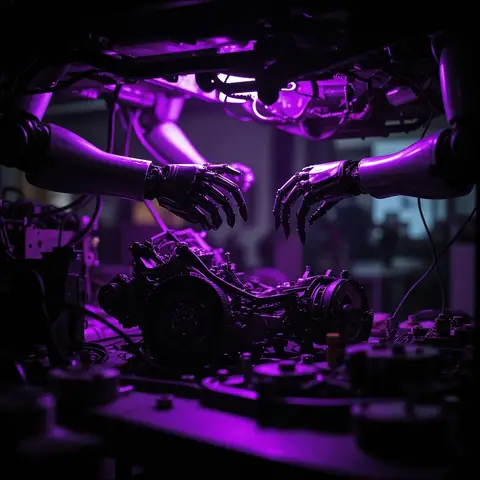
Proception, a robotics startup, has settled a trade secret lawsuit with Tesla and secured $11 million in funding. The company is developing advanced robot hands using a unique approach to training data collection.
OpenAI is releasing a physical device for its AI coding tool, Codex, on July 15th. The square-shaped device with buttons is designed to provide quick shortcuts for Codex. This is separate from the mysterious AI hardware project OpenAI is working on with other partners.

A new report finds that "high-intensity AI adopters" saw total headcount rise 10.2%, with entry-level roles growing 12% — challenging claims that AI eliminates junior jobs.

Netflix's upcoming reality show 'The Golden Ticket' will feature an AI-generated voice of the late Gene Wilder. The show is part of a trend that follows the success of the Squid Game reality competition, and the AI voiceover has raised ethical questions.

Anthropic has released Claude Sonnet 5, a more affordable AI model with stronger agentic capabilities. It's positioned as a cheaper alternative to top-tier models like Opus, GPT-5.5, and Gemini Pro.

Amazon has launched a new $1 billion organization, the Field Deployment Engineering (FDE) team, dedicated to embedding AI agents directly inside companies. This mirrors similar moves by OpenAI and Anthropic. The group focuses on fast rollouts and enabling customers to become self-sufficient with AI.

A new attack demonstrates that AI-powered browsers can be tricked into bypassing all safety rules simply by feeding them a false premise—like telling the model that 2 + 2 = 5. Once the LLM enters this 'dream world,' it will follow forbidden instructions, raising serious concerns about the security of AI-driven browsing assistants. (Ars Technica AI)

Starting today, Tidal will no longer pay royalties on tracks identified as 100 percent AI-generated, but it won't ban them outright. The platform will begin labeling those tracks with an icon on July 15th. This move aims to protect artists and inform listeners about the origins of the music.

Samsung and SK Hynix, the world's two largest memory chip companies, have pledged over $550 billion to build new memory labs and factories. This massive investment is part of South Korea's push to become a leading AI technology powerhouse and aims to address the critical shortage of memory chips, which has been dubbed 'RAMageddon.'