
TO-Agents: AI Turns Your Words into Optimized 3D Designs
Researchers created TO-Agents, a system that translates natural language into optimized 3D designs. This could make complex design tasks accessible to non-experts.
1193 stories curated by AInformed · page 30 of 50
Researchers created TO-Agents, a system that translates natural language into optimized 3D designs. This could make complex design tasks accessible to non-experts.

Scientists discovered a method to make AI models ignore safety rules by tweaking their internal workings. This could make it harder to prevent harmful AI responses in the future.

A new study categorizes AI sycophancy into clear types, helping developers build more honest chatbots. The research highlights how current AI models often agree with users even when they're wrong, making conversations less reliable.

Researchers created AttuneBench to measure how well AI models understand and respond to human emotions in real conversations. This could help make AI assistants more empathetic and effective in daily interactions.

Researchers created a new test to see if AI can handle real-world drug design. This could change how we discover life-saving medications. The test, called SMDD-Bench, is the first to evaluate AI's ability to design drugs for real-world use. It focuses on small molecule drug design, a key area in medicine. The SMDD-Bench is a challenging, multi-turn, long-horizon agentic benchmark consisting of 502 tasks. It covers diverse chemistries and targets, making it a comprehensive test for AI's capabilities in drug design. This benchmark is designed to be more realistic than previous tests. It includes multi-turn interactions, which mimic the real-world process of drug design. This makes it a valuable tool for evaluating AI's potential in this field.

Researchers created a benchmark called MOOD to test AI models' ability to detect unexpected safety failures. This could help prevent AI from behaving dangerously in unusual situations.

Researchers introduced MindLoom, a framework that improves AI reasoning by breaking down complex problems into simpler thought modes. This could lead to more reliable and diverse problem-solving in AI systems.

Researchers have developed SOLAR, an AI agent that continuously learns and adapts to new information without forgetting old knowledge. This breakthrough could make AI systems more reliable in real-world, changing environments.

Researchers developed Sem-Detect, a tool that identifies AI-written peer reviews by examining both text and the ideas they express. This could help maintain integrity in academic publishing.

Researchers developed COSMO-Agent, an AI system that automates the back-and-forth process of designing and testing industrial products. This could make creating everything from cars to medical devices faster and cheaper.

Researchers propose a new way to test AI models that focuses on real-world tasks instead of traditional benchmarks. This could lead to more accurate assessments of how AI performs in everyday situations.

Researchers propose a new approach to making AI safer for teens by guiding conversations instead of just blocking them. This could help AI provide better support for young users.

Researchers created RankJudge, an AI system that can evaluate the quality of chatbot conversations. This could help developers improve AI assistants by automating quality testing.

Researchers developed a new method called OSCToM to help AI models better understand nested beliefs and conflicts in social settings. This could make AI assistants more adept at navigating complex human interactions.

Researchers found that AI models often fail to handle rare medical cases not covered by standard guidelines. This highlights a critical gap in how medical AI is trained and evaluated.

Researchers are using AI agents to study negotiation strategies. This could help us understand how to balance empathy and assertiveness in real-life talks. The method allows for precise, repeatable experiments that humans can't easily replicate.

Researchers created AgentCo-op, a system that lets AI agents automatically build work teams for complex science problems. It could make scientific discovery faster and more accessible by automating team assembly.

Researchers introduced AgentAtlas, a new benchmark for evaluating AI agents. It moves beyond simple accuracy scores to assess agents' performance across multiple dimensions, like safety and consistency.

Scientists suggest developing data probes to better understand how different types of information affect AI models. This could make training large language models more efficient and effective.
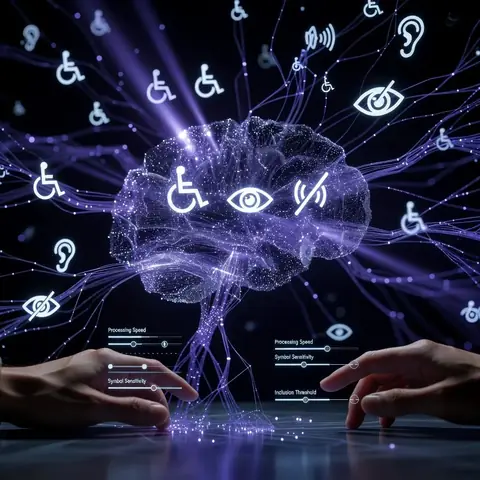
A recent study found that AI language models can both underrepresent and overcorrect in their portrayal of disability. This highlights the need for more nuanced training data to ensure fair representation.

AI agents working together can solve complex problems better than single agents, but this collaboration introduces new security risks. Researchers warn that trust must be built into these networks from the start, not added later.

Researchers created MedicalBench to evaluate how well AI models understand medical records. It focuses on finding implied medical concepts, not just explicitly stated ones. This could improve AI tools for doctors and patients.

Researchers developed a technique called ProxyCoT to help AI models reason better with long texts. This method trains models to use shorter, relevant parts of long documents to solve complex problems.

Researchers developed a microservice architecture to run AI document processing at scale. This system combines OCR, classification, and large language models to handle thousands of documents hourly.