
New AI Model Lets Businesses Plan Like Never Before
Researchers introduced a 'business world model' (BWM) that helps AI systems plan and optimize entire business strategies. This could make companies more efficient and adaptable to change.
98 stories tagged Innovation · page 3 of 5
Researchers introduced a 'business world model' (BWM) that helps AI systems plan and optimize entire business strategies. This could make companies more efficient and adaptable to change.
Researchers propose the Regulatory Context Protocol (RCP), an Agent-to-Agent communication standard that could drastically speed up nuclear reactor approvals. The approach uses AI to handle routine regulatory communication, freeing humans to focus on critical safety decisions.

Terry Tao, a Fields Medal-winning mathematician, has become a leading advocate for integrating AI into mathematical research. He argues that AI can assist in discovering new patterns and solving problems that have long resisted human effort, potentially transforming how mathematics is done.
Researchers introduced AEGIS, a system that uses a lightweight probe on a robot's activations to detect high-risk steps and switch to a stronger policy only when needed, preventing gradual failure in long-horizon manipulation tasks.

Airbnb is launching an AI lab to develop its own AI tools. This could change how we book and experience travel. The lab will focus on creating AI solutions tailored for the travel industry.

When AI models edit code repeatedly, they tend to recycle the same solutions rather than exploring new ones. This could limit how creative AI tools can be when helping programmers. Researchers found that in 87% of mutation chains, over 93% of AI-generated code mutations revisited familiar structural forms.
President Trump signed an executive order creating a voluntary framework for AI companies to share their frontier models with the federal government before public release. The order aims to promote secure innovation and strengthen the cybersecurity of critical infrastructure.

At Microsoft's annual Build conference, the company announced a slew of new or expanded AI initiatives, including a super app, in-house reasoning models, a cybersecurity tool, and AI agents. The message is clear: Microsoft is positioning itself as a major independent AI player, ready to compete directly with its former partner OpenAI.
Researchers created a new memory system called AURA that helps robots learn efficiently without needing high-end VRAM. This could make robots smarter and more adaptable in real-world settings.

Meta is working on a wearable AI device shaped like a pendant. This could make AI assistance more accessible and hands-free for everyday tasks.
Google unveiled major updates to its Gemini AI models, including Gemini Omni and Gemini 3.5 Flash. These advancements bring more powerful, accessible AI tools to everyday users.

A new AI tool converts visual information into sound, helping blind people navigate their surroundings. This technology could transform daily life for the visually impaired.

Companies are now using AI-generated synthetic customers to test products before real customers see them. This speeds up development and reduces costs. It's like having a virtual focus group that never sleeps.
Students at the University of Waterloo are developing AI prototypes, including a sign language tutor, to revolutionize learning and professional skills. These tools aim to make education more accessible and adaptable to individual needs.
Kirkland & Ellis, a top law firm, is creating its own AI platform with a $500M investment. This could revolutionize legal work by automating routine tasks and improving efficiency.
China is increasingly keeping its best AI talent at home, reflecting a global trend where countries are prioritizing domestic AI development. This shift could reshape the global AI landscape and impact international collaboration.

AI tools are now capable of performing tasks that were once the domain of high-priced consultants. This shift could democratize access to expert advice and reduce costs for businesses.
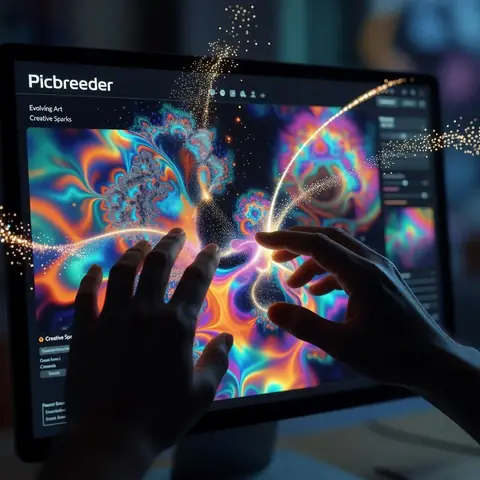
A new study investigates whether AI can replicate the open-ended creativity of humans, using Picbreeder as a model. The research could help us understand if AI can generate truly novel and meaningful ideas on its own.

A previously unknown AI model called Hy3 has surged to the top of OpenRouter's performance charts. It's raising questions about who created it and how it became so powerful.

Researchers created an AI system that debates scientific ideas to generate new hypotheses. This could speed up discoveries in fields like battery research by combining fragmented knowledge.

Physicists have developed hybrid particles that combine light and matter, potentially replacing electrons in AI chips. This breakthrough could make AI systems faster and more energy-efficient. The discovery was published in a recent study and has sparked excitement in the tech community.

A new report reveals that only a small fraction of AI computing power is used by labs working on the most advanced models. Most AI compute is still used for simpler, less innovative tasks. This highlights a significant gap in how AI resources are allocated.

Google's I/O 2026 event introduced several groundbreaking AI technologies, including Gemini Omni, a versatile AI model, and Google Antigravity, a new productivity tool. These innovations aim to make AI more accessible and integrated into daily life.

LetinAR has developed a thumbnail-sized lens that could revolutionize AI glasses. This innovation might make augmented reality as common as smartphones in the near future.