Apple Researchers Discover a 'Super Weight' That Can Control AI Behavior
Apple researchers found a single parameter in AI models that can dramatically change how they behave. This discovery could make AI more predictable and easier to control.
All 3,125 AI stories, newest first · page 54 of 131
Apple researchers found a single parameter in AI models that can dramatically change how they behave. This discovery could make AI more predictable and easier to control.

Anthropic’s new Claude Tag feature turns Slack into an AI-powered teammate that learns your company’s workflows and institutional knowledge. This could make team collaboration more efficient while giving Anthropic valuable insights into enterprise operations.

Anthropic and OpenAI spent millions backing opposing candidates in a New York congressional race. The expensive AI-funded political battle ended in a narrow defeat for their proxy, Alex Bores, rather than a complete tie.

Anthropic has formally accused Alibaba of unauthorized access to its proprietary AI models. The allegation, reported by Bloomberg, raises new questions about intellectual property theft and competitive espionage in the fast-moving AI industry.
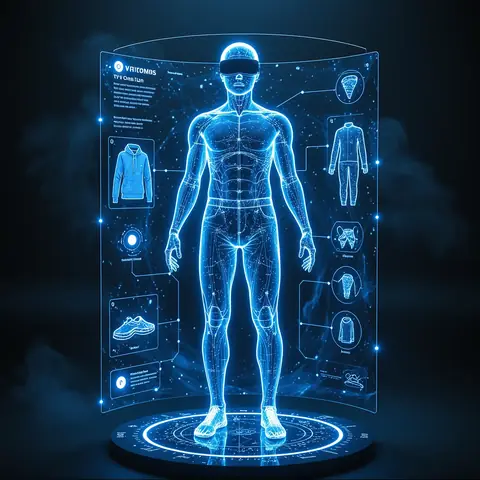
A new AI feature from a fashion retailer lets you see how clothes look on you before purchasing. This could reduce returns and make online shopping more confident.
A new AI tool can identify deepfake videos with near-perfect accuracy. This could help combat misinformation and protect users from fake content online.

Dromeas.ai has introduced an AI system that simulates a council of expert programmers to review your code. This could make professional-level code reviews accessible to everyone, not just big tech companies.

A new study found that AI chatbots fail to provide consistent safety for most mental health conditions. Only suicide and self-harm have reliable safeguards in place. Researchers call for better standards and transparency.

X (formerly Twitter) has launched AI-enhanced 'Community Notes' to help users fact-check posts. This tool allows crowdsourced corrections with AI assistance, making misinformation easier to spot.

Researchers developed SciLens, an AI system that can verify scientific claims by analyzing both text and images. This tool could make it easier for scientists and the public to check the accuracy of research findings.

Sakana AI released Fugu Ultra, a new AI model that matches the capabilities of leading frontier models like Google's Gemini and OpenAI's GPT. The model is designed to be more accessible and cost-effective, with fewer restrictions.

Scientists developed a new method using Shapley values to measure how adjectives influence AI responses. Their findings reveal how small word choices can significantly impact AI performance and alignment.

Researchers developed PeerCheck, a system to enhance AI-generated academic reviews toward human-level quality. It addresses challenges in the traditional peer review process as academic submissions grow.

Researchers developed PEAR, a dynamic AI debate system that improves reliability by changing roles and reducing biases. This could make AI responses more trustworthy and consistent.

Omio has integrated OpenAI's technology to create a conversational travel assistant. This innovation makes planning trips faster and more intuitive for users.

A new research paper introduces a reference architecture for 'agent skills' — reusable, externalized behavioral knowledge that LLM agents can discover, activate, and interpret at runtime. The framework formalizes how skills are bound to context and authority, interpreted by stochastic agents, and recorded as run evidence.

A new study examines how different AI reasoning strategies perform under varying conditions. The findings show that some methods hit performance limits even with more computing power. In plain English, this means AI problem-solving isn't as flexible as we thought.

A new paper finds that offline recommendations to mix AI models from different "families" for diversity may not hold up in real-time interactive settings—the very environments where multi-LLM systems are actually deployed. This discovery could change how multi-AI systems are designed.

Researchers propose a new language to clearly define how AI and humans should work together in software development. This could make teamwork between people and AI more predictable and reliable.

A new paper argues that the success of modern AI vindicates a modest form of associationism: the idea that learning is uniform, gradual, and driven by feedback. This could reshape how we think about both AI and human cognition.
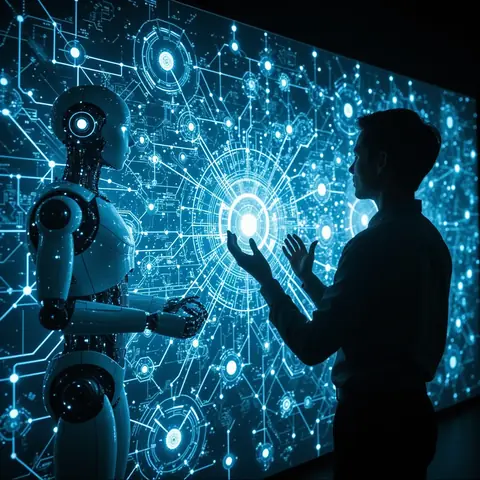
Researchers developed LAGO, a system that helps AI robots plan tasks by understanding human language. This could make robots more useful in everyday settings. The framework predicts intermediate goals from language, reducing errors in planning.

Mistral's CEO suggests AI companies should pay a fee to use copyrighted material, sparking debate. This could impact how AI models are trained and priced in Europe.
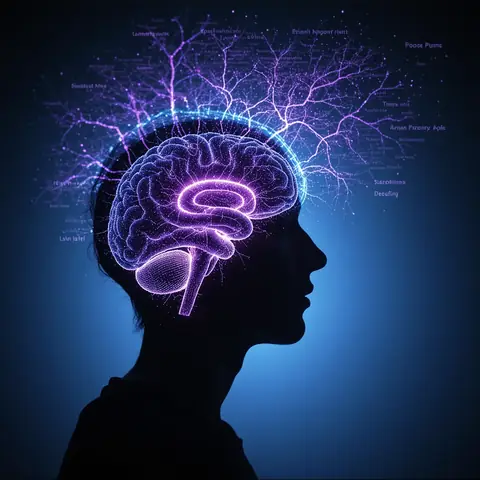
Researchers have developed a novel AI system called MindAlign that can decode inner speech from fMRI brain signals, enabling open-ended text generation without task-specific fine-tuning. This breakthrough could aid communication for people who cannot speak, but it also raises significant privacy concerns.

Microsoft has integrated DALL-E 3 into Bing Image Creator, making it easier for users to generate high-quality images. This update enhances creativity and accessibility for everyday users.