Anthropic’s Opus 4.8 introduces ‘Dynamic Workflows’ for AI teamwork
Anthropic just released Opus 4.8, a new AI model that can coordinate multiple AI assistants to work together. This could make complex tasks faster and easier for regular users.
All 3,125 AI stories, newest first · page 78 of 131
Anthropic just released Opus 4.8, a new AI model that can coordinate multiple AI assistants to work together. This could make complex tasks faster and easier for regular users.

Anthropic, a rival to OpenAI, has reached a staggering $965 billion valuation. This makes it the most valuable AI company in the world. The news highlights the intense competition in the AI sector.

A new study tested AI-generated reviews for academic papers and found they don't always match human opinions. The research also reveals that authors can "game" the system by using AI to revise their papers before submission, raising serious questions about fairness and reliability in scientific publishing.

The Austrian Academy of Sciences, in collaboration with Mistral AI and Reply, is developing an AI model called Apollo to read and translate ancient Greek papyri. This project could revolutionize how we study historical texts that were previously unreadable.
AI models can't reliably tell cause from effect, even with fine-tuning. Researchers prove this is a fundamental limitation and propose a new method to overcome it.

Warp, a developer tools company, is using OpenAI's GPT-5.5 to create intelligent coding agents that work across local, cloud, and open-source environments. This could make coding faster and more collaborative for everyone.

The head of GCHQ, the UK's intelligence agency, has warned that AI could become an unstoppable force in cyber warfare. This highlights the urgent need for global cooperation to manage AI's risks and ensure its responsible use.

The New York Times is in a labor dispute over AI use in the newsroom. The union wants strict rules to prevent AI from replacing human journalists. This could set a precedent for other media companies.

A detailed breakdown explains how large language models like ChatGPT are built and function. This helps demystify the technology for curious beginners.

A new study found that AI models often avoid answering ethical questions directly, showing a tendency to be non-committal. This 'omissive bias' could have real-world consequences when people rely on AI for advice.
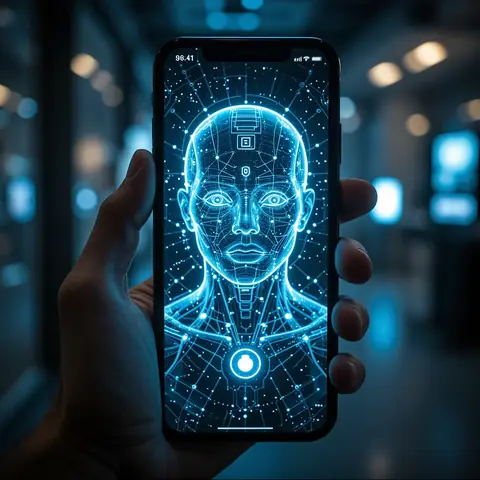
Sesame, founded by Oculus creators, has launched its iOS app, offering AI agents that feel more like talking to a person than a traditional chatbot. This could change how we interact with AI on our phones.

A new study reveals a simple method to bypass safety filters in AI image generators. The technique, called PAST2HARM, uses past tense prompts to trick models into creating harmful content.

OpenAI, Thrive, and Crete have built an AI-powered tax agent that automates filings and improves accuracy over time. This could make tax preparation faster and more reliable for everyone.
AI models often verify facts better than they generate them, creating a 'factual gap'. This research explores why this happens and how it affects our trust in AI. New research reveals AI models often verify facts better than they generate them, creating a 'factual gap'. This research explores why this happens and how it affects our trust in AI.

Researchers have developed a new AI system that can detect human values in text, both explicit and implicit. This could help make AI decisions more aligned with ethical and moral considerations.

Researchers have introduced two advanced AI models designed for long-term coding tasks. These models, Laguna M.1 and XS.2, represent a significant leap in AI capabilities for software development.

Microsoft has updated its AI assistant, making it twice as fast and easier to use. The redesign includes cleaner responses and a more intuitive interface across all devices.

Kirkland & Ellis, a top law firm, is creating its own AI platform with a $500M investment. This could revolutionize legal work by automating routine tasks and improving efficiency.
Apple’s upcoming iOS 27 will feature a redesigned Siri with a ChatGPT-like interface. The new design includes a sleek, modern look with a chat-based interaction style.

CNN has filed a lawsuit against Perplexity, claiming the AI startup copies its articles word-for-word and bypasses paywalls. This legal battle highlights the ongoing tension between traditional media and AI companies over content use.

Anthropic released Claude Opus 4.8, an AI model that’s better at admitting when it doesn’t know something. This could make AI interactions feel more trustworthy and less confusing.

Cisco has published a guide to help organizations protect themselves from AI-driven cyber threats. The guide provides practical steps to secure systems against increasingly sophisticated attacks.

Cisco is integrating OpenAI's Codex to speed up software development and improve cybersecurity. This partnership aims to automate tasks, reduce errors, and enhance productivity for enterprise teams.

Asana has acquired Stack AI, a no-code agent-builder platform, to enhance its AI-driven workflow tools. This move aims to make automation more accessible to non-technical users.