
AI-Powered Tool Helps Blind Individuals 'See' Through Sound
A new AI tool converts visual information into sound, helping blind people navigate their surroundings. This technology could transform daily life for the visually impaired.
All 3,125 AI stories, newest first · page 77 of 131
A new AI tool converts visual information into sound, helping blind people navigate their surroundings. This technology could transform daily life for the visually impaired.

Researchers at UC San Diego have developed an AI model that can predict how tumors will respond to treatments by analyzing their genetic mutations. This could lead to more personalized and effective cancer treatments in the future.

Companies are now using AI-generated synthetic customers to test products before real customers see them. This speeds up development and reduces costs. It's like having a virtual focus group that never sleeps.
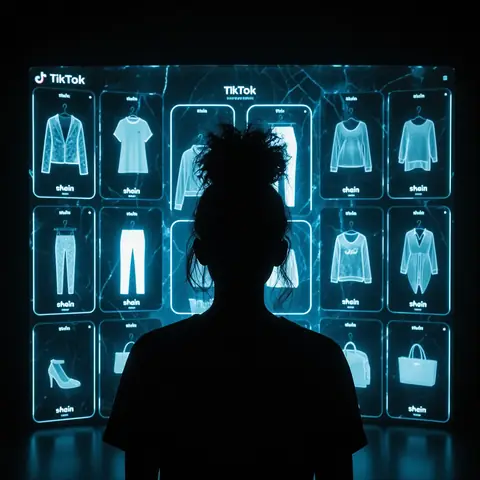
Scammers are using AI to create fake Black influencers to sell cheap products on TikTok. This deceptive practice exploits both consumers and the Black community, with one account even using a fake Black woman named Aliyah to hawk handmade metal buckles.

South Korean chip startup XCENA has raised $135 million at a $570 million valuation to develop memory solutions for AI. They argue that memory, not processing power, is the real bottleneck in AI performance. This could revolutionize how AI systems are built and scaled.

Researchers have developed VFEAgent, an AI system that automates Finite Element Analysis (FEA) from images and text descriptions. This could make advanced engineering tools accessible to non-experts, speeding up design processes.

Students at the University of Waterloo are developing AI prototypes, including a sign language tutor, to revolutionize learning and professional skills. These tools aim to make education more accessible and adaptable to individual needs.

Tiny-vLLM is a new open-source tool that makes running large language models faster and more efficient. It could make advanced AI tools more accessible to regular users.

Sam Altman, CEO of OpenAI, now believes AI won't cause the massive job losses he once predicted. He says AI will create new opportunities instead. This shift in perspective is significant for workers and businesses alike.

Scientists have created StoryMI, a multi-AI system that can generate realistic therapeutic dialogues. This tool could help train therapists and provide new ways to practice motivational interviewing techniques.

Phoenix Code is a new desktop editor where AI can see and interact with your entire page. This could revolutionize how we write and edit code, making it faster and more intuitive.

The Open Web Application Security Project (OWASP) launched Agent Memory Guard, a tool to defend AI agents from memory poisoning attacks. This is crucial as AI systems become more integrated into daily tasks.

OpenAI has launched Rosalind Biodefense, a specialized AI tool for biodefense and public health. It's designed to help vetted developers and U.S. government partners prepare for and respond to biological threats.

Nvidia is pouring $150 billion into Taiwan to make it the global center of AI chip production. This move comes as the US struggles to meet its own AI hub ambitions, highlighting Taiwan's critical role in the tech supply chain.

Researchers found that different large language models (LLMs) often categorize the same public comments in conflicting ways. This can shape what policymakers see, potentially biasing decisions. The study proposes a new audit pipeline to flag disagreements for human review.

A new AI tool called Claw-Learn helps students understand math problems by showing step-by-step visual explanations. This could make learning math more intuitive for those who struggle with traditional methods.

Researchers created a new AI model called the Cognitive Categorical Transformer (CCT) that mimics how the human brain categorizes information. It outperforms a standard model by 12% on a language test, showing promise for smarter, more context-aware AI assistants.

Kog AI has developed a method to run large language models at 3,000 tokens per second on standard GPUs, making advanced AI faster and more accessible. This breakthrough could significantly reduce the cost and complexity of AI applications.

Researchers found that the tone of your questions can change how well AI models like ChatGPT answer. Polite or neutral tones often get better results than aggressive or overly casual ones. This matters because it shows how small changes in how we talk to AI can make a big difference in the answers we get.

Google unveiled Gemini Omni and Gemini 3.5 at I/O 2026, showcasing their advanced AI capabilities through nine impressive demos. These models push the boundaries of what AI can do, from creative tasks to complex problem-solving.

DeepSeek has made its advanced AI models dramatically cheaper to use. This could make powerful AI tools accessible to far more people and small businesses.

Major cloud providers are redesigning their infrastructure to handle AI-generated traffic, not just human users. This shift could make the internet faster and more efficient for everyone.
Brilliant has launched an AI tutor designed to help kids develop critical thinking skills. The tool guides students through problem-solving with thoughtful questions rather than just giving answers.
Boston Children’s Hospital is using AI from OpenAI to help diagnose rare diseases faster. The technology has already helped identify over 40 cases that might have been missed otherwise. This can make a huge difference for families searching for answers.