LLM-as-a-Judge Study: Scoring Rubrics Alone Can Predict AI Evaluations, Revealing Hidden Bias
Summarized by AI from reporting by ArXiv cs.CL, published under our editorial policy.
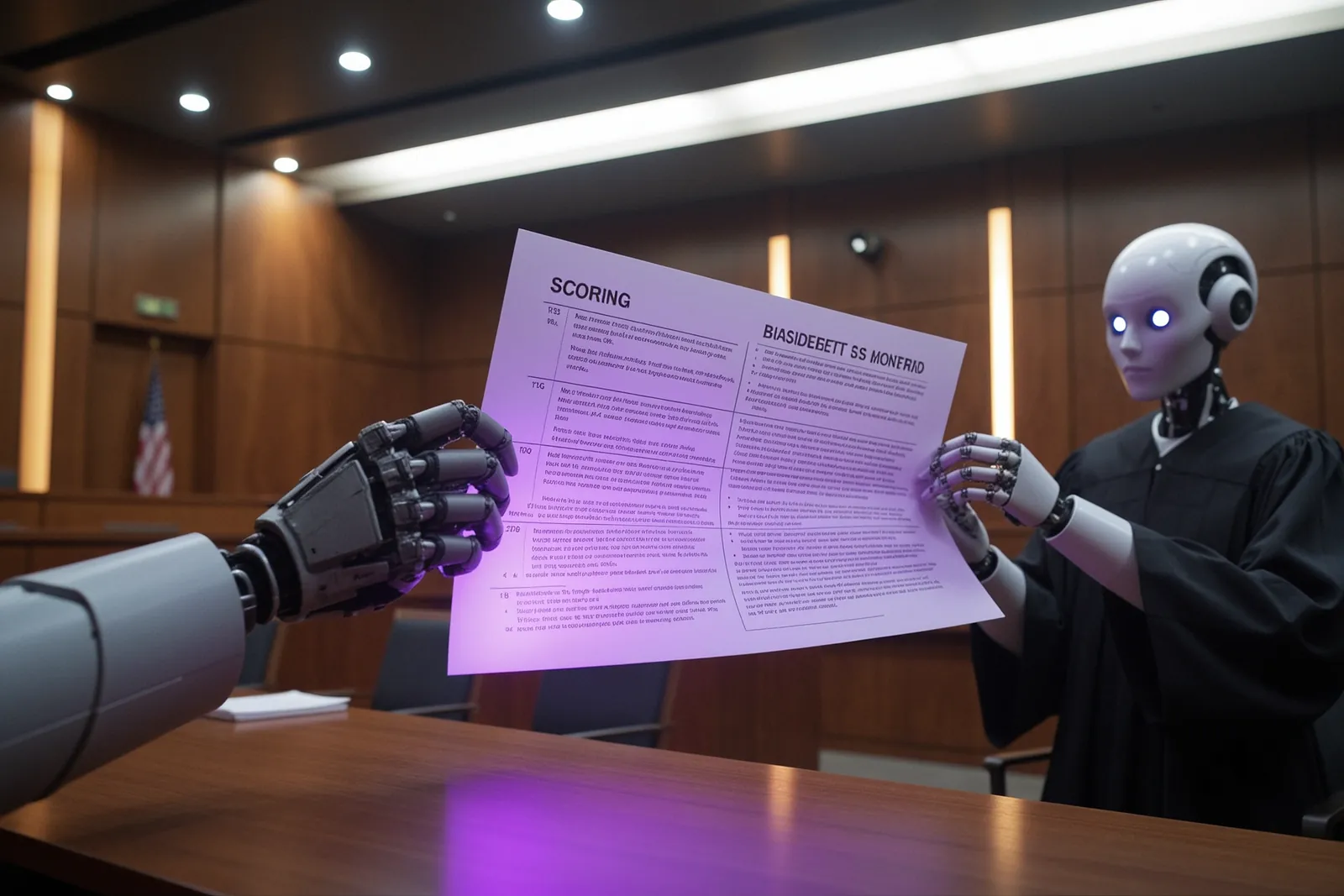
A new arXiv study reveals that classifiers trained only on rubric text—without seeing any evaluated response—can predict LLM judge outputs. This means scoring rules encode evaluative signals that bias AI evaluations independently of content quality.
Key takeaways
- Classifiers trained only on rubric text can predict LLM judge outputs without seeing the evaluated responses, as shown in arXiv:2609.02942.
- The study reveals that scoring rubrics encode evaluative signals that can bias AI judgments independently of the content being evaluated.
- Users of LLM-as-a-Judge pipelines should review rubric design and consider supplementing automated evaluations with human reviews.
A new study published on arXiv challenges a core assumption behind LLM-as-a-Judge pipelines: that AI judges evaluate text based on reasoning over candidate responses against a rubric. The researchers show that classifiers trained solely on rubric text—with zero access to the evaluated responses—achieve nontrivial predictive performance on judge outputs. This means the scoring rules themselves contain recoverable evaluative signals that can partially determine scores, independent of the actual content being judged.
Rubric Text Alone Predicts AI Judge Scores
The study, titled "Judging LLM-as-a-Judge: Concerning Rubric Artifacts in LLM-based Automated Text Generation Evaluation" (arXiv:2609.02942), demonstrates that the assumption that LLM judgments arise from reasoning over responses warrants further scrutiny. By training classifiers exclusively on rubric formulations, the researchers found that evaluative signals embedded in the rubric allow scores to be anticipated without any knowledge of the candidate text. This suggests that AI evaluations may be less objective and more biased by the scoring framework than previously understood.
Why This Matters for Automated Evaluation Systems
If AI judges are influenced by the wording and structure of scoring rubrics, it could affect how AI-generated content is evaluated across applications—from educational grading tools to customer service chatbots and content moderation systems. For example, an LLM judge evaluating student essays might systematically favor responses that match the rubric's phrasing, even if the content quality is not superior. This could introduce hidden biases into grading, hiring, and other automated decision-making processes.
Practical Implications for Users of AI Evaluation Tools
While this research is early-stage, it highlights the importance of scrutinizing evaluation criteria in AI tools. Users of platforms that rely on LLM-as-a-Judge pipelines—such as automated grading software, content quality checkers, or AI feedback systems—should be aware that the rubric itself may encode biases. Look for tools that disclose their evaluation criteria and consider supplementing automated assessments with human reviews to mitigate potential rubric artifacts.
Concrete Action: Review Rubrics and Use Multiple Methods
If you use an AI evaluation tool like Gradescope for grading, review the rubric and evaluation criteria carefully. Consider cross-checking automated scores with human evaluations to ensure fairness and accuracy, especially in high-stakes contexts.
Frequently asked
- What does it mean that rubric text alone can predict AI judge scores?
- It means that classifiers trained only on the wording of scoring rubrics—without any access to the text being evaluated—can predict what score an LLM judge will assign, indicating that the rubric itself contains biases that influence the evaluation.
- Which specific AI models were tested in this study?
- The source paper (arXiv:2609.02942) does not specify which LLMs were used as judges; it focuses on the general phenomenon of rubric artifacts in LLM-as-a-Judge pipelines.
- How can I check if my AI evaluation tool has rubric bias?
- The study suggests testing whether scores correlate with rubric phrasing independent of content. For practical purposes, compare automated scores with human evaluations and review whether the rubric language might favor certain response styles.