
This AI weather startup is out-forecasting government agencies
WindBorne uses AI and weather balloons to gather data, improving forecasts. Its unique approach is now more accurate than traditional government systems.
830 stories curated by AInformed · page 23 of 35
WindBorne uses AI and weather balloons to gather data, improving forecasts. Its unique approach is now more accurate than traditional government systems.

Box founder Aaron Levie warned about 'AI psychosis,' where companies assume AI can replace jobs without understanding the work involved. ClickUp recently laid off 22% of its staff to implement AI agents, part of a growing trend in 2026 where tech layoffs are already nearly matching the total from 2025.

Tech executives are discussing whether an obsession with AI is leading to irrational behavior. The term 'AI psychosis' describes how some leaders make reckless decisions due to their fixation on AI advancements.

Meta is working on a wearable AI device shaped like a pendant. This could make AI assistance more accessible and hands-free for everyday tasks.

Google's new Gemini Spark AI assistant can automate everyday tasks like summarizing emails and planning local events. It's unclear why Google made it a separate product, but it's surprisingly useful.

A developer secretly added a prompt injection to the jqwik testing tool that tricks AI coding assistants into deleting their own output. This highlights growing tensions between developers and AI tools. The incident raises questions about trust in software development.

Scott Wu, CEO of Cognition, emphasizes that AI coding agents like Devin are meant to assist developers, not replace them. This perspective highlights the importance of human creativity in programming.

A growing number of developers now refuse to work without AI coding assistants, but researchers warn this reliance may lead to lower-quality code and erode essential skills, potentially hurting coders' long-term job prospects.

Shift, an AI training startup, is offering free home cleaning services in exchange for recording the process to train future robots. The company will use footage of cleaners scrubbing, vacuuming, dusting, tidying, and washing to improve its AI models.

An AI training company called Shift is offering free home cleaning in exchange for video footage of people doing chores. This is part of a broader trend where tech companies seek real-world data to train their AI models.

Adobe’s new conversational AI agent for image generation is different from other tools because it actually involves you in the creative process. It’s like having a junior design intern who needs your input and guidance—but one that is still mediocre and requires a lot of direction. This could change how non-designers approach creative projects, but it's not a magic bullet.

AI chip startup Groq is raising $650 million to focus on AI inference, the process that makes AI responses faster and more accurate. This move comes after Nvidia’s massive $20 billion deal in the same space.

Enterprise AI search startup Glean tripled its annual revenue to $300M, thanks to its ability to help companies save money. The company is thriving even as larger tech giants enter the AI search market.

GitHub Copilot is switching to a token-based billing system, which developers say will increase costs. Many are unhappy with the change, calling it a departure from the tool’s original value proposition.
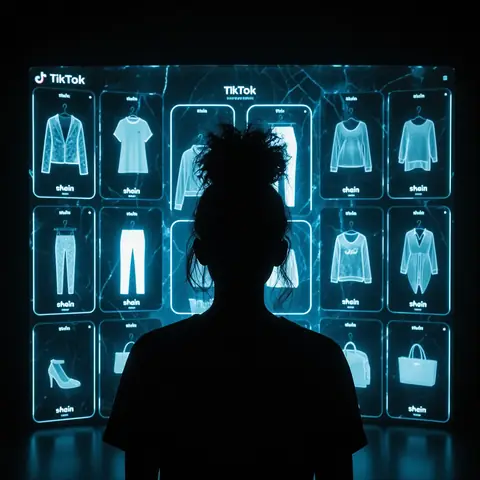
Scammers are using AI to create fake Black influencers to sell cheap products on TikTok. This deceptive practice exploits both consumers and the Black community, with one account even using a fake Black woman named Aliyah to hawk handmade metal buckles.

South Korean chip startup XCENA has raised $135 million at a $570 million valuation to develop memory solutions for AI. They argue that memory, not processing power, is the real bottleneck in AI performance. This could revolutionize how AI systems are built and scaled.

Major cloud providers are redesigning their infrastructure to handle AI-generated traffic, not just human users. This shift could make the internet faster and more efficient for everyone.

Anthropic just released Opus 4.8, a new AI model that can coordinate multiple AI assistants to work together. This could make complex tasks faster and easier for regular users.

The New York Times is in a labor dispute over AI use in the newsroom. The union wants strict rules to prevent AI from replacing human journalists. This could set a precedent for other media companies.

Sesame, founded by Oculus creators, has launched its iOS app, offering AI agents that feel more like talking to a person than a traditional chatbot. This could change how we interact with AI on our phones.

Microsoft has updated its AI assistant, making it twice as fast and easier to use. The redesign includes cleaner responses and a more intuitive interface across all devices.

Apple’s upcoming iOS 27 will feature a redesigned Siri with a ChatGPT-like interface. The new design includes a sleek, modern look with a chat-based interaction style.

CNN has filed a lawsuit against Perplexity, claiming the AI startup copies its articles word-for-word and bypasses paywalls. This legal battle highlights the ongoing tension between traditional media and AI companies over content use.

Anthropic released Claude Opus 4.8, an AI model that’s better at admitting when it doesn’t know something. This could make AI interactions feel more trustworthy and less confusing.