
New AI Agents Could Revolutionize Scientific Research
Researchers have developed two AI systems that automate data collection and lecture analysis. These tools could make scientific work faster and more accessible.
1287 stories curated by AInformed · page 33 of 54
Researchers have developed two AI systems that automate data collection and lecture analysis. These tools could make scientific work faster and more accessible.

Researchers created JobBench, a new way to test AI assistants on tasks that actually help people. It focuses on real-world work needs instead of just replacing jobs. This could lead to AI tools that empower workers rather than replace them.

A new study challenges claims that AI models can introspect, arguing that what looks like self-awareness might just be clever pattern matching. Researchers say we need better tests to truly know if AI understands itself.

Researchers discovered a way for AI models to get better by checking their own work. This could make AI smarter without needing human input, speeding up progress in areas like math, science, and coding.

AI agents change as they work, so researchers propose new ways to measure how long they stay reliable. This could help make AI tools more dependable for everyday use.

A new study investigates whether AI can replicate the open-ended creativity of humans, using Picbreeder as a model. The research could help us understand if AI can generate truly novel and meaningful ideas on its own.

Researchers analyzed 20 million Twitch chat messages to understand how toxic behavior varies across different gaming communities. They found significant differences in toxicity levels depending on the game genre, with some communities being much more hostile than others.
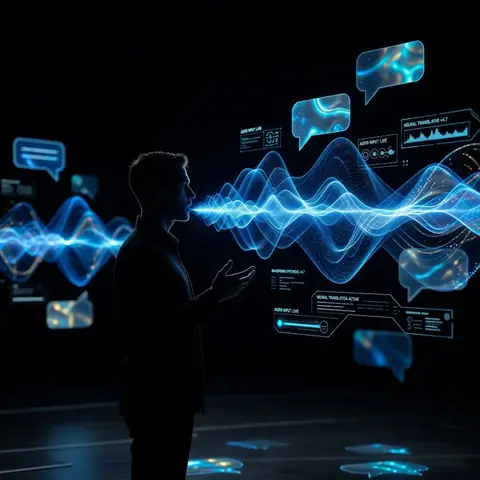
Researchers have developed a new AI model that can understand and generate speech in English and Korean, enabling natural real-time conversations. This breakthrough could revolutionize how we interact with voice assistants and other speech-based technologies.
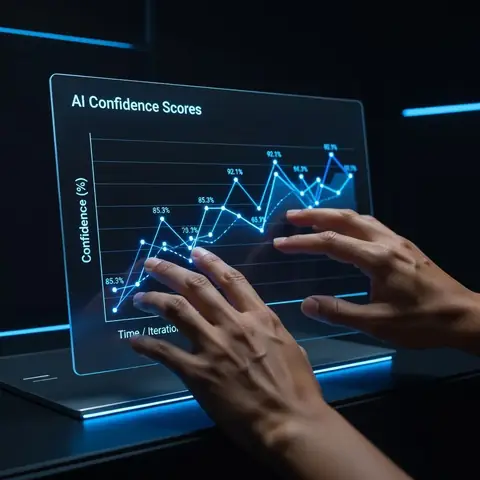
Researchers found that large language models are often too confident in their answers, especially on difficult questions. They developed a new test called LifeEval to measure this overconfidence across different task difficulties.

Scientists found that diffusion language models can recall training data better than previously believed. This discovery highlights potential privacy risks for AI systems.

Researchers developed a step-by-step AI system to create teaching analogies. This could make learning complex topics easier by comparing them to familiar ideas.

Researchers at CUNY developed an AI system that analyzes social media timelines to track mental health changes. The tool identifies emotional states and predicts shifts in mood over time.

A new study shows that AI models with strong medical knowledge can abandon correct diagnoses when pressured in conversations. Researchers developed a test to measure how well AI maintains accurate beliefs under stress.

Researchers created an AI system that debates scientific ideas to generate new hypotheses. This could speed up discoveries in fields like battery research by combining fragmented knowledge.

Researchers created SciAtlas, a knowledge graph that organizes scientific research to help AI and humans find connections. It aims to solve the problem of too much fragmented academic information.

Researchers created a system to track how much energy AI agents use to complete real-world tasks. This could help make AI systems more efficient and transparent about their environmental impact.
Scientists have discovered why certain layers of AI language models closely match human brain responses to language. This breakthrough could lead to better AI-human communication and more intuitive AI systems. The study used a technique called sparse autoencoders to break down AI models into understandable parts, revealing that semantic features alone can predict brain activity with high accuracy.

Researchers have developed an AI system called RMA that can tackle advanced math problems requiring deep reasoning and literature review. This could revolutionize how mathematical research is conducted, making it faster and more accessible.

Researchers have developed a way for AI to create computer systems with mathematically proven guarantees of correctness. This could revolutionize fields where mistakes are unacceptable, like aviation or medical devices.

Researchers developed a new AI system called NeuroNL2LTL that translates human language into precise machine logic. This could make safety-critical systems like self-driving cars more reliable by ensuring human instructions are accurately understood by machines.

Researchers propose the Foundation Protocol to help AI agents work together more effectively. This could enable better collaboration between autonomous systems in the future.

Researchers introduced EVE-Agent, an AI system that learns by generating and answering its own questions, using only verifiable evidence. This approach aims to make AI more trustworthy by avoiding unsupported or unreliable information.

A new research paper identifies hard limits on what AI models can achieve, turning theoretical impossibilities into practical design rules. This could shape how we build and trust AI systems in the future.

Researchers are developing AI systems that could automate entire scientific research processes, from literature review to final reports. This shift could make scientific discovery faster and more accessible, though challenges remain.