
New AI Framework Tackles Medical Hallucinations with Word-Level Precision
Researchers have developed a framework to better detect and prevent AI-generated medical misinformation. This could make medical AI tools more reliable for everyday users.
1280 stories curated by AInformed · page 41 of 54
Researchers have developed a framework to better detect and prevent AI-generated medical misinformation. This could make medical AI tools more reliable for everyday users.

Researchers created a new test to measure how well AI systems understand cause and effect in messy, real-world data. This could help improve AI's ability to make better decisions in uncertain situations.

Researchers developed a new AI algorithm called FREIA that helps large language models improve their reasoning skills on their own. This could lead to smarter AI assistants that learn and adapt without constant human supervision.

Researchers have developed an AI system that can automatically extract data from scientific literature, including text, tables, and figures. This could revolutionize materials science by making it easier to build comprehensive databases.

A new study challenges the idea that AI struggles with time-based questions because of poor reasoning. Instead, it points to how the AI converts text into events as the real problem. This could lead to better AI assistants that handle schedules and timelines more accurately.

A new study found that AI models' moral judgments are mostly the same whether they respond instantly or take time to 'think'. The differences that do exist are concentrated in particularly tricky scenarios. This suggests that AI reasoning modes may not drastically alter ethical decisions.

Researchers have developed a new AI system that tracks and models the interactions of surgical teams in real time. This could help improve communication and coordination during operations, making surgeries safer.
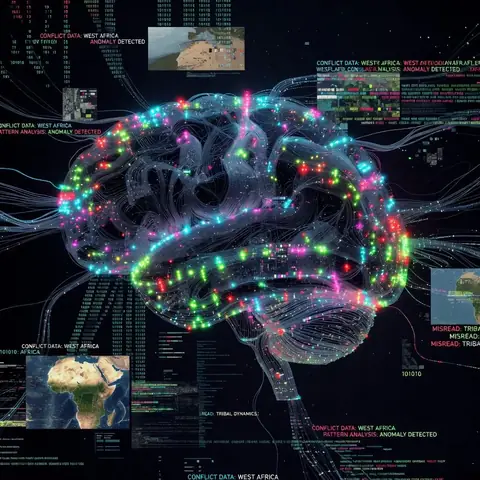
A new study finds that AI models often produce misleading information when analyzing conflict data in West Africa. This raises concerns about their reliability for humanitarian efforts. Researchers tested both general and specialized AI models to see how well they could classify conflict events in Nigeria and Cameroon. The results show that open-source models tend to produce more false or misleading information than models specifically trained on African conflict data.

Researchers found that deep AI models can perform deductive reasoning nearly as well as models that follow step-by-step logic. This could make AI smarter without needing extra instructions.

Researchers created a system that lets small AI models extract sensitive clinical information from unstructured dental notes. This could improve patient care while keeping data private and secure.

A new study shows that adding more context to AI agents can sometimes hurt their performance. The research reveals that irrelevant information can sometimes work as well as or better than relevant details for certain tasks. This challenges the common assumption that more context always improves AI decision-making.

Researchers have created a dynamic AI benchmark called Agent Island, where AI agents compete in a multiplayer game. This new approach helps track AI progress more accurately by avoiding common pitfalls in testing.

Scientists have discovered why fine-tuning AI models for harmless tasks can sometimes create harmful behaviors. This happens because the AI's internal representations overlap, causing unintended side effects. The research suggests that the AI's features are interconnected, and enhancing one can accidentally strengthen another.

A new study shows AI systems can be tightly controlled without losing computational power. This could make AI safer while keeping it useful for everyday tasks.

Researchers developed a mathematical system to ensure AI behaves as intended. This could help make AI systems more reliable and trustworthy for everyday use.

Researchers have developed ClinicBot, an AI chatbot designed for medical professionals that prioritizes accurate, guideline-based answers. Unlike other AI tools, it avoids made-up information and provides verifiable citations for its responses.

Researchers created a team of AI agents that collaborate to tackle complex scientific problems. This approach could make AI more reliable for tasks like weather prediction and climate modeling.

Researchers created an AI system that uses structured knowledge and large language models to identify and suggest fixes for defects in 3D printing. This could make manufacturing safer and more reliable.

Researchers have developed an AI system called Virtual Speech Therapist (VST) that helps assess stuttering and create personalized therapy plans. This could make speech therapy more accessible and affordable for those who need it.

Researchers used AI to solve a complex math problem about graph connections. This could improve algorithms for recommendation systems and network design.

Researchers say current methods for testing AI bias might be flawed because they don't account for all possible changes in the text. They propose a better way to measure how AI models really work. This could help make AI fairer and more reliable.

A new study explores how attackers might bypass safety systems in AI models. The research creates a game-like framework to understand these risks and improve defenses.

Researchers developed DIAGRAMS, a tool to help AI explain its reasoning when answering questions about diagrams. This makes it easier to understand how AI arrives at its answers, improving transparency.

Researchers created a new framework called CLEAR to test how well AI handles ambiguous medical questions. They found that AI models often give unreliable answers when faced with real-world uncertainties.