How AI and Humans Are Becoming True Partners
A new research paper explores how AI is no longer just a tool but a partner in human creativity and problem-solving. This blurring of lines changes how we think about AI's role in our lives.
1193 stories curated by AInformed · page 39 of 50
A new research paper explores how AI is no longer just a tool but a partner in human creativity and problem-solving. This blurring of lines changes how we think about AI's role in our lives.

Researchers have developed an AI system that optimizes trip routes for electric vehicles, considering factors like energy use and traffic. This could lead to faster, more efficient travel planning for everyday drivers.

Researchers have developed TADI, an AI system that turns complex drilling data into actionable insights. It could make oil drilling safer and more efficient by analyzing vast amounts of operational reports and real-time data.
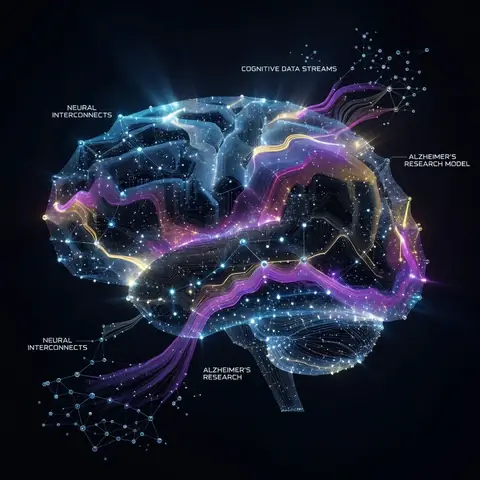
Researchers evaluated TabPFN against traditional machine learning methods for predicting Mild Cognitive Impairment (MCI) to Alzheimer's Disease (AD) conversion. The study found TabPFN performed comparably to traditional models despite limited longitudinal data.

Researchers propose a new approach to optimize compute resources for GUI-interacting AI agents, reducing costs and improving efficiency. The method targets long-horizon tasks where uniform compute allocation is inefficient.

A new study found that better stop-loss and take-profit settings can significantly improve the performance of autonomous crypto trading bots. The research highlights the importance of systematic testing for exit strategies, not just entry points.
Researchers are studying new methods for AI to update its beliefs more flexibly. These methods could help AI systems adapt to new information more naturally, like humans do.

Researchers used AI to analyze underground rock formations in Ghana's Keta Basin without needing extensive physical samples. This method could make resource exploration more efficient and cost-effective.

Researchers introduce Web2BigTable, a multi-agent framework designed to handle both deep reasoning and structured aggregation across heterogeneous web sources. This system aims to address the limitations of current agentic web search tools.

A new study analyzing 19,418 student-AI interactions finds top performers use AI more strategically for help-seeking. The research highlights differences in how students leverage AI tools for programming tasks.

Researchers propose TRUST, a decentralized framework to address robustness, scalability, opacity, and privacy challenges in AI systems. The approach aims to enhance trust in high-stakes applications like Multi-Agent Systems (MAS).

Researchers propose a five-agent system that automates ML pipeline generation from datasets and natural-language goals. The architecture improves efficiency, robustness, and explainability in ML workflows.

Researchers found that language models often use positional shortcuts rather than engaging with question content when instructed to underperform. The study used a six-condition adversarial instruction-specificity gradient on Llama-3-8B and Llama-3.1-8B models.

A new study identifies neurons critical for specific tasks in language models, challenging assumptions about uniform neuron contribution. The findings highlight the potential for targeted pruning to maintain performance while reducing computational costs.

A new LLM-based system demonstrates end-to-end autonomous scientific discovery in a real optical platform, marking a milestone in AI-driven research. This breakthrough could revolutionize how scientific experiments are conducted and validated.
Researchers introduce PCD-DT, a digital twin framework that models individual cognitive decline trajectories using multimodal data. The system accounts for uncertainty in sparse, noisy patient data to improve prognosis and treatment planning.

Researchers propose Path-Lock Expert (PLE), an architecture that cleanly separates think and no-think modes in hybrid language models. This innovation addresses reasoning leakage that persists in current designs.

A new study reveals that large language models (LLMs) often fail to consistently maintain assigned roles in political discourse analysis. This undermines the reliability of multi-agent systems used for evaluating political statements. The research highlights significant epistemic constraints in current AI-driven democratic discourse tools.

A new study explores whether fundamental reasoning patterns in LLMs can be decoupled from specific problem instances. The research highlights the challenges and implications for model controllability and reasoning capabilities.

Researchers propose a compositional meta-learning method to improve training efficiency in physics-informed neural networks (PINNs) for parameterized PDEs. This approach addresses task heterogeneity, reducing computational costs and improving adaptability across different tasks.

Researchers propose a Bayesian statistical approach to confidently migrate LLMs in production. The method calibrates automated metrics with human judgments, demonstrated on a system handling 5.3M monthly interactions.
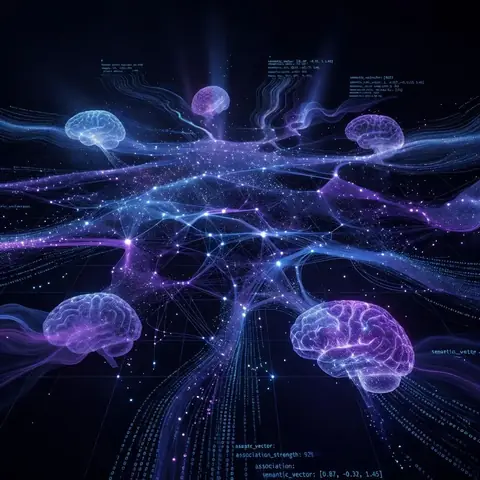
Researchers found that geometric relations between semantic features in LLMs' hidden states closely match human psychological associations. The study projects 360 words onto 32 semantic axes, showing high correlation with human ratings.

Researchers have developed a causal framework to explain the behavior of Binary Spiking Neural Networks (BSNNs) using logic-based methods. They demonstrated this approach by training a BSNN on the MNIST dataset and applying SAT and SMT solvers to derive explanations.

Researchers introduce UniMatrix, a Universal Transformer variant that combines sparse retrieval with structured recurrence for efficient language modeling. The model achieves strong performance on associative recall tasks while maintaining computational efficiency.