
SOCBench: New Open Benchmark for AI in Security Operations Center Tasks
DeepTempo released SOCBench, an open benchmark to test AI's ability to handle Security Operations Center (SOC) tasks, including reducing false positives in alert triage.
1854 stories tagged AI · page 28 of 78
DeepTempo released SOCBench, an open benchmark to test AI's ability to handle Security Operations Center (SOC) tasks, including reducing false positives in alert triage.

Researchers developed REDI, a framework to automate the complex process of preparing scientific data for AI training. It handles everything from data cleanup to tracking where the data came from, making it easier for scientists to use AI effectively.

ContextCore is an open-source project that enables AI agents to remember long conversations on Apple Silicon devices using GPU-accelerated context retrieval, making on-device AI far more practical for complex, multi-turn tasks.

Savi launched its app to detect and block AI-generated voice and video scams, such as a scammer using a cloned loved one's voice to demand ransom. The company just raised $7 million in seed funding to expand protections for everyday users.

Researchers developed a framework that analyzes text and images to spot fake news and predict mob violence before it happens. This could help prevent real-world harm caused by misinformation.

Researchers introduced a new approach to make AI systems better understand and align with human decision-making. This could help people trust and use AI tools more effectively in everyday tasks.

Neuronpedia is an open-source platform that makes AI models more transparent by visualizing their inner workings. It helps researchers and developers understand how AI systems make decisions.

Meta’s new Muse Image model can add real people—like your Instagram friends—into AI-generated photos. This feature is already live in Meta AI, Instagram, and WhatsApp, with Facebook and Messenger coming soon.

Apple’s latest iOS 27 beta update allows users to adjust Siri’s speaking speed and expressivity. This personalization feature aims to make the assistant feel more natural and tailored to individual preferences.

Researchers have developed a new unified multimodal foundation model that jointly models vision, language, world dynamics, and action generation. This advancement could lead to more capable robots and virtual assistants that can understand instructions, anticipate environmental changes, and execute precise actions over extended horizons.

Google has updated its privacy settings to collect more of your data, including images and recordings, to improve its AI models. You can opt out of this data collection through your Google Account settings.

Researchers have unveiled Gemma 4, a new suite of open-weight AI models that handle text, images, and audio together. These models are designed to be more efficient and better at reasoning, with sizes ranging from 2.3 billion to 31 billion parameters.

Context Warp Drive is an open-source tool that helps AI agents remember important information over long conversations. It could make AI assistants much more reliable for complex tasks.

Researchers developed a new AI approach that mimics how doctors gather evidence to make diagnoses. This method could make AI medical tools more accurate and reliable.

Vercel's CEO argues that separating AI models from agents is crucial for better performance and cost efficiency. This shift could make AI tools faster and more affordable for businesses and developers.

Utah has become the first state to allow AI to refill prescriptions without direct doctor approval. Some physicians worry about patient safety and the lack of human oversight, while regulators seek a balance between innovation and caution.

AI systems are vulnerable to 'prompt injection' attacks, where hackers trick them into revealing data or performing unauthorized actions. A new survey examines the best ways to protect against these threats.

Reddit is deploying large language models (LLMs) to fight a spam epidemic largely created by those same AI tools. The move reflects a growing arms race as platforms are forced to fight fire with fire to keep discussions authentic.

Mistral AI is a French startup developing advanced AI models with a focus on open-source accessibility. The company has raised significant funding and aims to make cutting-edge AI available to everyone.

LeRobot v0.6.0 is an open-source library focused on real-world robotics, providing datasets, models, and simulation tools for reproducible AI research. It is not an image generation tool.
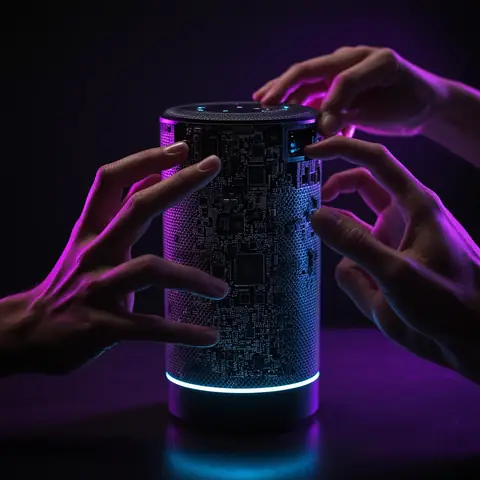
Google launched a new smart speaker with its Gemini AI, but the technology isn't yet advanced enough to make it truly useful. This highlights how AI still has a way to go before it can transform everyday devices.

University of Washington researchers developed Ekka, a system that automatically detects silent errors in LLM outputs. This could make AI systems more reliable for everyday users.

Edgee.ai's new Compressor V2 reduces the cost of running AI agents by half using three layers of compression. This makes powerful AI tools far more affordable for businesses and developers.

A new online resource explores how AI can be integrated into computing systems to create smarter, more efficient loops that continuously optimize data and processes. This could revolutionize how we design and use technology in everyday life.