
Nvidia CEO Unveils $200B Opportunity in AI Agent CPUs
Nvidia's CEO Jensen Huang announced a new $200 billion market for AI agent CPUs. This shift could make Nvidia a key player in the future of AI-driven automation.
1854 stories tagged AI · page 57 of 78
Nvidia's CEO Jensen Huang announced a new $200 billion market for AI agent CPUs. This shift could make Nvidia a key player in the future of AI-driven automation.
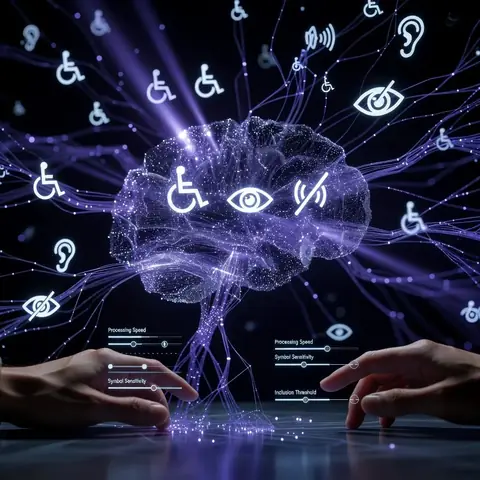
A recent study found that AI language models can both underrepresent and overcorrect in their portrayal of disability. This highlights the need for more nuanced training data to ensure fair representation.

Researchers created MedicalBench to evaluate how well AI models understand medical records. It focuses on finding implied medical concepts, not just explicitly stated ones. This could improve AI tools for doctors and patients.

Researchers developed a technique called ProxyCoT to help AI models reason better with long texts. This method trains models to use shorter, relevant parts of long documents to solve complex problems.

Researchers developed a microservice architecture to run AI document processing at scale. This system combines OCR, classification, and large language models to handle thousands of documents hourly.

Researchers created a new test to measure how well AI agents balance user privacy with task performance. POLAR-Bench evaluates AI's ability to protect sensitive data while still getting the job done.

Hark, a stealthy AI startup, has raised $700M to create a universal AI interface that works across all your apps and devices. The company plans to launch its first multimodal models this summer, followed by custom hardware.

Researchers introduced FlowLM, a new AI model that simplifies text generation using a novel technique. It transforms existing diffusion models into more efficient flow models, reducing the steps needed for high-quality text generation.

Figma has introduced an AI assistant that lets users create and edit designs using simple text commands. This could make design work faster and more accessible for non-experts.

Anthropic is leasing SpaceX's massive data centers for AI training, paying $15 billion annually. This deal highlights the skyrocketing costs of developing advanced AI models.

Researchers tested AI models on personal health records, finding they can translate complex medical data into useful answers. This could make your health records more actionable without needing a doctor's help.

Researchers created OpenCompass, a universal tool to evaluate AI models. It aims to solve the problem of inconsistent and fragmented testing methods. In plain English, it's like a standardized test for AI, making it easier to compare different models fairly.

An OpenAI AI model has solved the unit distance problem, a major challenge in discrete geometry. This breakthrough disproves a long-standing conjecture and shows AI's potential in advanced mathematics.

OpenAI is partnering with Singapore to expand AI use, train local talent, and support businesses. This initiative aims to make advanced AI tools more accessible in the region.

OpenAI's new AI model has reportedly solved a geometry problem that stumped mathematicians for 80 years. This time, experts are backing the claim, unlike a previous failed attempt.

Polish author and Nobel laureate Olga Tokarczuk reportedly used AI to assist in writing her latest novel. This marks a significant moment in the intersection of AI and literary arts.

Researchers have developed a new method called DECOR to detect subtle deception in AI responses. This tool helps identify exactly how and where AI models distort facts, making it easier to hold them accountable.

Researchers have developed a compact AI model called FormalASR that converts spoken Chinese into polished, formal written text in one step. This could make transcribing meetings, lectures, and interviews much easier and faster.

Researchers developed an AI agent that converts natural language into SQL queries with high accuracy. This could make database management much easier for non-experts.

Ramp engineers are using OpenAI's Codex with GPT-5.5 to get faster code reviews. This AI tool helps them identify issues and suggest improvements in minutes, not hours. It's like having a super-smart assistant that never gets tired.

Google DeepMind has integrated Street View into its Genie world model, creating realistic simulations of real-world streets. This advancement could revolutionize robotics, gaming, and travel planning by offering immersive, interactive environments.

Google has upgraded its AI Studio platform to let users create native Android apps just by describing their ideas. This makes app development accessible to anyone, even without coding skills. You can now build and test an Android app in minutes, right from your browser.

Google DeepMind has launched Co-Scientist, an AI tool that acts like a team of research assistants. It helps scientists analyze data, write papers, and brainstorm ideas, potentially speeding up scientific discovery.

Google is launching Gmail Live, an AI-powered voice assistant for your inbox. This feature lets you search, compose, and manage emails using just your voice. It's designed to make email interactions faster and more intuitive.