
Lingxi Li Releases Free AI Model Training Tool for Developers
Lingxi Li has released a free tool that allows developers to train AI models with minimal resources. This could democratize AI development by removing costly hardware barriers.
299 stories tagged Open Source · page 3 of 13
Lingxi Li has released a free tool that allows developers to train AI models with minimal resources. This could democratize AI development by removing costly hardware barriers.

MegaTrain is a new open-source tool that makes it possible to train 100-billion-parameter AI models on a single consumer-grade GPU, dramatically lowering the cost of developing custom AI models for small teams and hobbyists.

OpenAI CEO Sam Altman recently conceded that societal inertia and institutional lag are slowing the real-world impact of AGI, even as AI leaders track rapid advances in autonomous agents and rising competition from open-weight models.

Multiverse Computing's Quantization-Aware Healing compresses AI models to 4-bit precision while improving their accuracy, enabling smaller, faster models for resource-constrained devices.

IBM released Granite 4.2, a suite of open-source AI models ranging from 3 billion to 34 billion parameters, optimized to run on consumer-grade GPUs. The models are available on Hugging Face and are designed to make advanced AI accessible to individuals and small organizations without high-end hardware.

Hugging Face's Summer 2026 report reveals over 10,000 open-source AI models, a 30% surge in contributors, and new models like Mistral 2.0 that rival proprietary systems in performance, making advanced AI more accessible than ever.

Palantir co-founder Alex Karp accused major AI labs like OpenAI and Anthropic of designing addictive models. He argued that open-weight models are essential to give users control and break dependency on proprietary platforms.

Do-over is a tool that creates snapshots of files before AI agents like Claude Code execute commands, allowing you to undo accidental deletions. It protects untracked files and those outside your git repository, filling a gap that git alone can't cover.

OGX (Open GenAI Stack) is an open-source AI application server and Python library that implements the APIs of major AI labs including OpenAI, Anthropic, and Google. It allows developers to build agentic AI applications using a single API surface, then deploy with any combination of inference engine, vector database, and safety backend without changing application code.

Meta released Glimmer, an open-weight AI model that anyone can download and run on their own hardware. This contrasts with Meta's more powerful Muse Spark, which remains locked behind its APIs. Mark Zuckerberg argues AI should be accessible to everyone, not just a few labs.

MegaTrain, an open-source tool from developer Wast3, enables training 100-billion-parameter AI models on a single consumer GPU, dramatically lowering the hardware barrier for large-scale AI development.

MBZUAI, Cerebras, and Inception have released Jais 2, a family of open large language models optimized for Arabic. The family includes a 70-billion-parameter model, the largest open Arabic-centric LLM trained from scratch, and an 8-billion-parameter variant. Both models use a custom Arabic-centric vocabulary for efficient training and inference.

ProofRun is an open-source tool that generates local verification receipts for code produced by AI coding agents, providing a verifiable record of execution and output to ensure reliability.

The Allen Institute for AI has released OlmoEarth embeddings, a new feature in OlmoEarth Studio that lets users export custom numerical representations of environmental data for downstream analysis in Python, R, and other tools.

ThoughtDAG is an open-source tool by Chen Xiachan that lets users visually edit the context of LLM conversations as a Directed Acyclic Graph (DAG), enabling transparent and customizable AI interactions.

LiquidAI released LFM2.5-VL-3B, a lightweight 3-billion-parameter vision-language model that achieves strong benchmark accuracy while running efficiently on edge devices with as little as 4GB of RAM.

NVIDIA open-sourced Magpie TTS, a tool for building low-latency, multilingual voice agents with full deployment control, enabling developers to create custom voice applications without third-party dependencies.

Meta has released Muse Glimmer, an open-source AI agent designed to run locally on consumer hardware. It is multimodal, agentic, and customizable, enabling text generation, image creation, and complex workflows without sending data to the cloud.

The Allen Institute for AI released TutorMoments, an open-source dataset that teaches AI tutors when to step in and when to let students struggle, aiming to reduce interruptions and improve learning outcomes.

In a wide-ranging interview with Axios, Nvidia CEO Jensen Huang dismissed fears of catastrophic AI risks and massive job losses, arguing that open models and expanding hardware infrastructure will drive unprecedented economic growth.
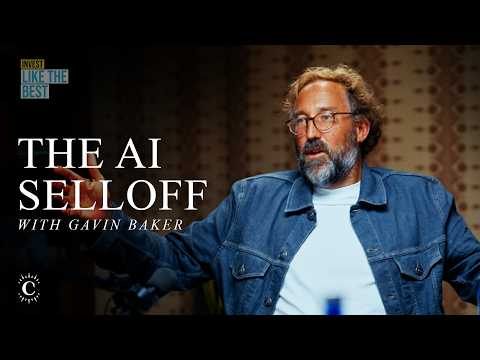
Investor Gavin Baker argues that recent AI equity sell-offs misreflect real-world demand, as token growth, GPU rental spot prices, and hyperscaler cash flows continue to accelerate.

MegaTrain, a new open-source tool from TinyLabs, enables training 100-billion-parameter AI models on a single high-end GPU like the NVIDIA H100, dramatically lowering the hardware barrier for large-scale AI development.

Liquid AI released LFM2.5-2.6B, an open-source framework that lets users deploy AI agents on their own devices, ensuring privacy and full data control.

Callosium is an open-source project that allows multiple AI models to share a single memory system stored in plain Markdown files. This could make AI interactions more consistent and context-aware across different platforms.