Theker Raises $85M for Reconfigurable Factory Robots
Theker has developed flexible robots that can adapt to different tasks, unlike specialized humanoid robots. This funding will help them build more versatile automation solutions for factories.
52 stories tagged Robotics · page 2 of 3
Theker has developed flexible robots that can adapt to different tasks, unlike specialized humanoid robots. This funding will help them build more versatile automation solutions for factories.
Researchers introduced AEGIS, a system that uses a lightweight probe on a robot's activations to detect high-risk steps and switch to a stronger policy only when needed, preventing gradual failure in long-horizon manipulation tasks.
Hello Robot released Stretch 4.0, a home assistance robot designed to help with household chores. This could make daily tasks easier for busy families and elderly individuals.
Amazon has upgraded its warehouse robot, Proteus, to understand and respond to human language. This shift toward more intuitive automation could change how warehouses operate and interact with human workers.
Researchers created a new memory system called AURA that helps robots learn efficiently without needing high-end VRAM. This could make robots smarter and more adaptable in real-world settings.
NVIDIA has released Cosmos 3, an open-source AI model designed for physical reasoning and action. This breakthrough could revolutionize how robots and AI systems interact with the real world.

Scientists found that AI models often predict realistic-looking but physically impossible outcomes. They propose a new approach that focuses on understanding real-world physics to make AI more reliable.
Shift, an AI training startup, is offering free home cleaning services in exchange for recording the process to train future robots. The company will use footage of cleaners scrubbing, vacuuming, dusting, tidying, and washing to improve its AI models.
Researchers developed POLAR, an AI system that helps robots learn personal preferences through long-term interactions. This could make future home robots more helpful by understanding individual needs.
Human Archive is paying gig workers in India to collect real-world physical data for AI and robotics training. This approach could make robots more adaptable to everyday human environments.
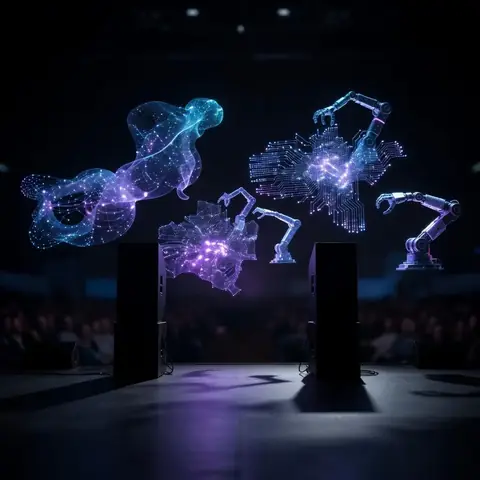
Google I/O 2026 featured insightful discussions on AI, quantum computing, robotics, and creativity. Leaders shared their visions for how these technologies will shape our future.
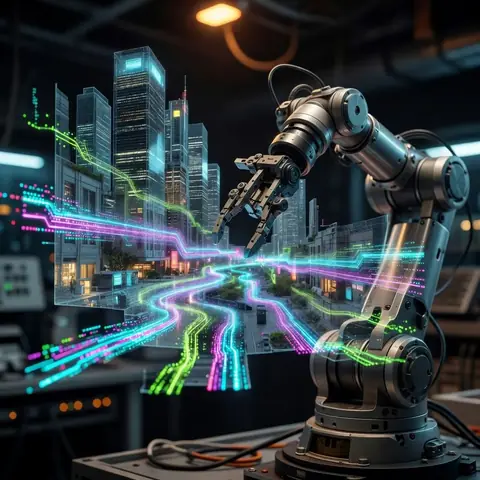
Google DeepMind has integrated Street View into its Genie world model, creating realistic simulations of real-world streets. This advancement could revolutionize robotics, gaming, and travel planning by offering immersive, interactive environments.
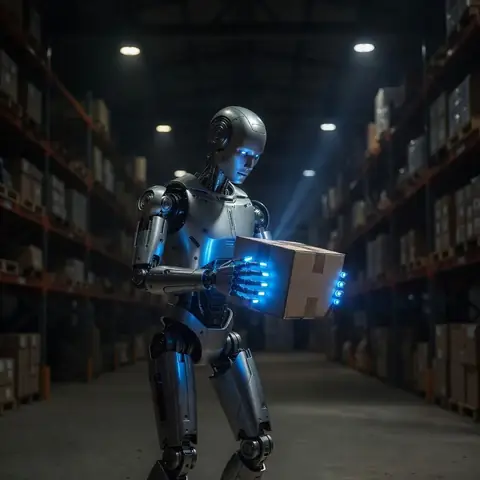
Figure AI's humanoid robots are now working in warehouses, grabbing and sorting packages. This could change how we get our online orders. The robots are still in testing, but they're impressively dexterous.
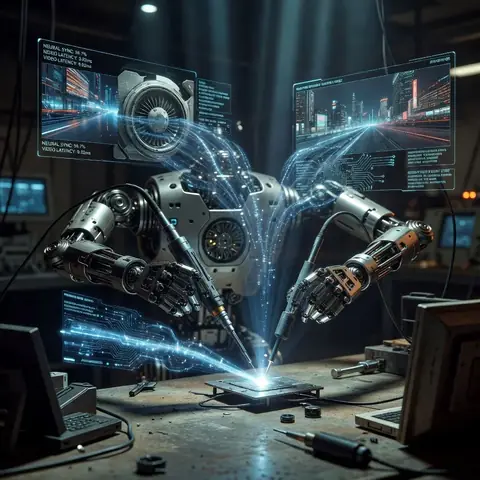
NVIDIA has fine-tuned its Cosmos Predict 2.5 model to generate realistic robot videos. This advancement could revolutionize robot training and simulation.
Researchers have developed a new system called VegAS that helps AI-powered robots make better decisions. It acts like a 'think twice' filter, improving their ability to handle unexpected situations. This could make robots more reliable in real-world tasks.
Researchers developed PIVOT, a system that helps AI agents improve their plans by learning from real-world failures. This could make AI assistants and robots more reliable in everyday tasks.

Researchers have developed a new AI framework called PRISM that helps AI agents make better decisions by tightly connecting what they see with how they think. This could improve AI assistants that interact with the real world, like robots or smart home systems.
Researchers have developed a new way for robots to plan complex tasks by combining both text and visual reasoning. This could lead to robots that can handle more intricate, real-world jobs. The key is a system called Interleaved Vision-Language Reasoning (IVLR), which helps robots understand both the logical steps and spatial constraints of a task.
Researchers propose a new way for AI to understand the world by combining physics with predictive models. This could make AI systems like robots and self-driving cars smarter and more adaptable.
Meta has acquired Assured Robot Intelligence, a humanoid robotics startup, to enhance its AI models for robots. This move underscores Meta's growing interest in physical AI applications beyond virtual environments.
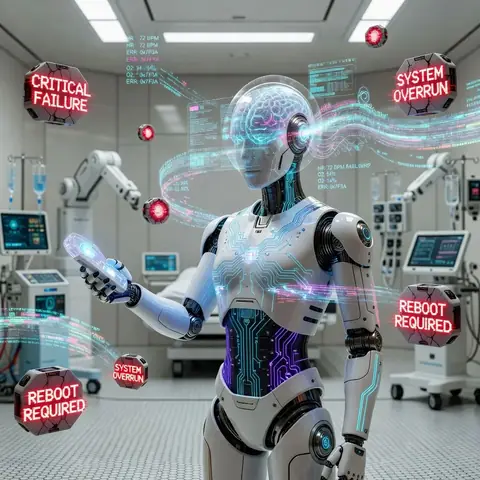
A new study evaluated 72 large language models on safety for robotic health attendants, finding a 54.4% average violation rate. The results highlight significant risks in deploying LLMs for medical applications without rigorous safety protocols.

Researchers introduce Distill-Belief, a teacher-student framework to address the challenge of closed-loop inverse source localization and characterization. This method aims to balance speed and accuracy in uncertain environments.
China is aggressively investing in embodied AI to revolutionize its robotics industry. This strategy aims to position the country as a global leader in AI-driven automation by 2030.

Physical Intelligence's new π0.7 model can perform tasks it wasn't explicitly trained for, marking progress toward general-purpose robotics. This breakthrough could revolutionize automation and robotics applications.