
SpaceX Plans $55 Billion AI Chip Factory in Texas
SpaceX is investing $55 billion to build a massive AI chip factory in Austin, Texas. This could make AI technology more affordable and widely available in the future.
215 stories tagged Technology · page 9 of 9
SpaceX is investing $55 billion to build a massive AI chip factory in Austin, Texas. This could make AI technology more affordable and widely available in the future.

Nvidia has already invested $40 billion in AI startups and companies in 2026. This massive funding push highlights the company's commitment to shaping the future of artificial intelligence.

Elon Musk’s lawsuit against OpenAI is forcing a closer look at the company’s commitment to safety. The case could reshape how AI labs balance profit with ethical goals.

A new AI model called ZAYA1-8B uses a clever design to perform as well as much larger models. It could make advanced AI tools more accessible and affordable for everyday users.

Using AI as a judge for code quality often fails because it lacks real-world context. A new approach combines AI with human-like evaluation for better results. This matters because it could make AI tools more useful for developers.

Researchers have developed an AI system called OncoAgent that helps doctors make better cancer treatment decisions without compromising patient privacy. This dual-tier framework uses multiple AI agents to analyze medical data securely.

Researchers developed FinAgent-RAG, an AI tool that helps answer complex questions about financial documents. It can handle tables, text, and footnotes to provide accurate insights.

Researchers found a way to bypass watermarks on AI-generated text, raising concerns about detecting fake content. This could make it harder to tell if text was written by a human or an AI.

Researchers have developed a new AI memory system called Lossless Context Management (LCM) that handles long texts better than Claude Code. This could make AI assistants more reliable for tasks requiring large amounts of information.

Marc Lore's company, Wonder, is developing AI-powered robotic kitchens that could let anyone create a virtual food brand. This could make starting a restaurant as easy as giving an AI a simple instruction.
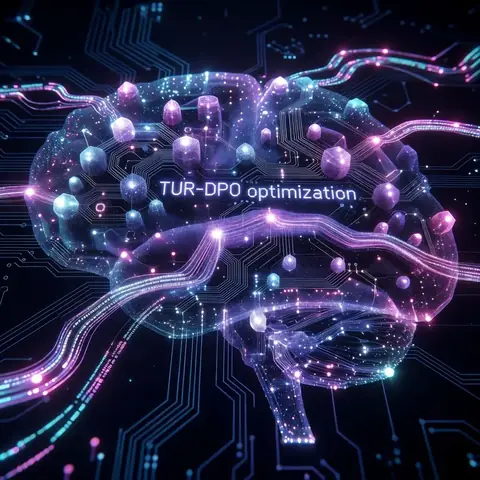
Researchers have developed a new method called TUR-DPO to improve how AI models learn from human feedback. This approach rewards the process of how answers are derived, not just the final output, making AI more reliable and less sensitive to noise.

Researchers have developed a new way for robots to plan complex tasks by combining both text and visual reasoning. This could lead to robots that can handle more intricate, real-world jobs. The key is a system called Interleaved Vision-Language Reasoning (IVLR), which helps robots understand both the logical steps and spatial constraints of a task.
A new study introduces AgentFloor, a benchmark to test how well smaller AI models can handle routine tasks. The goal is to see which parts of AI workflows need big, advanced models and which can be done by smaller ones.

OpenAI has shared how they make voice AI respond almost instantly. This matters because faster responses make AI assistants feel more natural and useful in daily life.

Mnemory is a new tool that lets AI agents remember information across conversations. This could make AI assistants much more useful in everyday tasks.

Streaming platforms are flooded with AI-generated music, raising questions about its quality and demand. The surge highlights a growing divide between what AI can create and what listeners actually want.
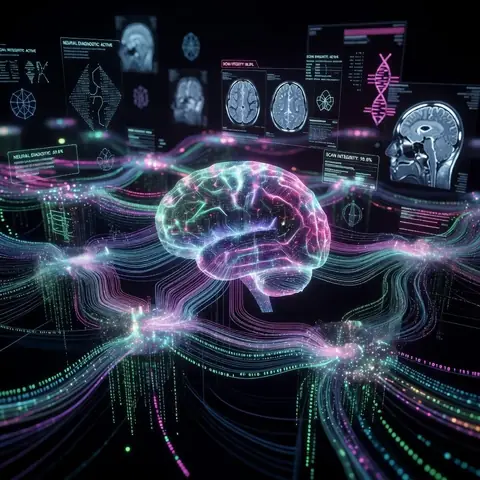
Recent studies show AI models achieving higher accuracy in medical diagnoses than human doctors. This shift could revolutionize healthcare delivery and decision-making.

OpenAI’s updated image generator, ChatGPT Images 2.0, now pulls information from the web to create more sophisticated images. This new feature allows for more detailed and accurate AI-generated art based on single prompts.

OpenAI has launched GPT Image 2, a new AI model capable of generating high-quality images from text prompts. The model represents a significant leap in AI-driven image creation.

AI-generated art has sparked debates about authenticity and value, raising questions about ownership and creativity. The phenomenon challenges traditional notions of artistic ownership and the role of human artists.

A new type of computer is emerging, blending neural networks with traditional hardware. This hybrid approach promises to revolutionize computing by merging AI and classical computing paradigms.

A new Gallup report shows Gen Z is growing disillusioned with AI, yet continues to use it extensively. The findings highlight a nuanced relationship as AI becomes more integrated into daily life.
Anthropic's new AI model, part of Project Glasswing, identifies security vulnerabilities in major operating systems and web browsers. The model is offered to launch partners, including Nvidia and Google, to enhance cybersecurity with minimal human intervention.