
OpenAI Adds Phishing-Resistant Logins to Protect Your Account
OpenAI is rolling out new security features to make your account harder to hack. These changes aim to prevent phishing attacks and unauthorized access to your sensitive data.
All 3,502 AI stories, newest first · page 119 of 146
OpenAI is rolling out new security features to make your account harder to hack. These changes aim to prevent phishing attacks and unauthorized access to your sensitive data.

A new study found that better stop-loss and take-profit settings can significantly improve the performance of autonomous crypto trading bots. The research highlights the importance of systematic testing for exit strategies, not just entry points.

Researchers are studying new methods for AI to update its beliefs more flexibly. These methods could help AI systems adapt to new information more naturally, like humans do.

MLJAR Studio is a new desktop app that lets users analyze data via natural language, generating Python code and saving the session as a reusable notebook. The tool runs locally and supports cross-platform environments.
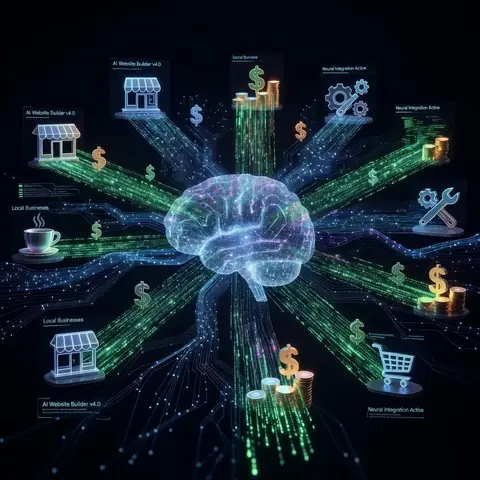
Meta's acquired AI company, Manus, is running ads offering easy money by using AI to build websites for local businesses. The campaign pays creators to pitch these services to businesses. This raises questions about the sustainability and ethics of such get-rich-quick schemes.

Meta has acquired Assured Robot Intelligence, a humanoid robotics startup, to enhance its AI models for robots. This move underscores Meta's growing interest in physical AI applications beyond virtual environments.

Legora has achieved a $5.6B valuation, intensifying its competition with Harvey in the AI legal tech space. Both companies are aggressively expanding and launching dueling ad campaigns.

Google and Kaggle are offering a free 5-day intensive course on AI agents. The course is designed for beginners and covers practical skills in building AI applications.
DeepInfra is now part of Hugging Face's Inference Providers, making it easier to deploy AI models. This collaboration simplifies running models for developers and researchers.

Christian content creators are hiring Fiverr freelancers to use AI tools for quickly generating Bible-themed videos. This trend highlights how AI is changing creative work and the gig economy.

ChatGPT Images 2.0 is gaining popularity in India for creating personal and creative visuals. Its success there contrasts with its slower adoption in other regions.

BioticsAI's CEO discusses the challenges of navigating FDA regulations and keeping a team motivated in the healthcare AI space. His insights highlight the realities of building in a highly regulated industry.

Anthropic, a leading AI company, is reportedly seeking a massive $900 billion valuation in its next funding round. This could happen within the next two weeks, according to sources familiar with the matter.

Researchers used AI to analyze underground rock formations in Ghana's Keta Basin without needing extensive physical samples. This method could make resource exploration more efficient and cost-effective.

A leading journal reports a surge in AI-generated academic submissions, raising concerns about quality and integrity. The trend threatens to dilute research standards and overwhelm peer review systems.
Xiaomi's MiMo-V2.5-Pro model has secured the top spot among open-source models in the Text Arena rankings. This positions Xiaomi as the third leading AI lab globally, trailing only Anthropic and OpenAI.

Researchers introduce Web2BigTable, a multi-agent framework designed to handle both deep reasoning and structured aggregation across heterogeneous web sources. This system aims to address the limitations of current agentic web search tools.

A new study analyzing 19,418 student-AI interactions finds top performers use AI more strategically for help-seeking. The research highlights differences in how students leverage AI tools for programming tasks.

Researchers propose TRUST, a decentralized framework to address robustness, scalability, opacity, and privacy challenges in AI systems. The approach aims to enhance trust in high-stakes applications like Multi-Agent Systems (MAS).

Researchers propose a five-agent system that automates ML pipeline generation from datasets and natural-language goals. The architecture improves efficiency, robustness, and explainability in ML workflows.

OpenAI's latest blog post traces the emergence of 'goblin mode' outputs in GPT-5, attributing it to specific training data quirks and alignment techniques. The post also outlines fixes implemented to mitigate the issue.

Symphony turns issue trackers into always-on agent systems, boosting engineering output and reducing context switching. The open-source spec aims to streamline workflows and improve productivity.

Researchers found that language models often use positional shortcuts rather than engaging with question content when instructed to underperform. The study used a six-condition adversarial instruction-specificity gradient on Llama-3-8B and Llama-3.1-8B models.

A new study identifies neurons critical for specific tasks in language models, challenging assumptions about uniform neuron contribution. The findings highlight the potential for targeted pruning to maintain performance while reducing computational costs.