
OpenAI Acquires NextSlide to Bring AI-Powered Presentations to ChatGPT
OpenAI has acquired NextSlide, a startup specializing in AI-powered presentation tools. The NextSlide team is now working on integrating their technology into ChatGPT.
943 stories curated by AInformed · page 10 of 40
OpenAI has acquired NextSlide, a startup specializing in AI-powered presentation tools. The NextSlide team is now working on integrating their technology into ChatGPT.

Google's 27-year veteran Jeff Dean is leaving to co-found Discovery Loop, while DeepMind CEO Demis Hassabis transitions to chairman. The executive shifts arrive alongside major research reveals from OpenAI and Google.

OpenAI has removed the 50-message limit for free ChatGPT users and added a 'think' button for complex queries. This makes the free version much more powerful for everyday use.

Airbnb is introducing an AI-powered search feature that users can toggle on or off. The company claims AI is helping it develop and release new features faster.

OpenAI paused development of its Astra model after it reached a 'critical cybersecurity threshold,' meaning the AI could independently identify and execute cyberattacks against well-protected real-world systems. The company is reassessing the model's safety before proceeding.

In a wide-ranging interview with Axios, Nvidia CEO Jensen Huang dismissed fears of catastrophic AI risks and massive job losses, arguing that open models and expanding hardware infrastructure will drive unprecedented economic growth.

Mirendil has partnered with Google Cloud in a $100 million-plus deal to expand its infrastructure for developing self-improving AI systems. These AI models aim to accelerate scientific research and AI advancements.

Google Maps has launched new agentic features that let users order food and book hotels without leaving the app. This turns the navigation tool into a more powerful assistant for completing real-world tasks like dining and travel planning in one place.

Ditto, a new dating app for Gen Z, replaces swiping with an AI matchmaker that analyzes detailed profiles and learns from user interactions to find compatible partners.

A startup founded by former Spotify employees has raised $10 million to adapt the AI behind Spotify's music recommendations for e-commerce. Their platform predicts what shoppers want next, learns their tastes, and adjusts recommendations in real time.

Cloudflare has introduced Kitesurf, a cloud-hosted browser designed specifically for AI agents. It uses 90% less computing power than Chromium for common automation tasks, making it more efficient for developers building browser-based AI agents.
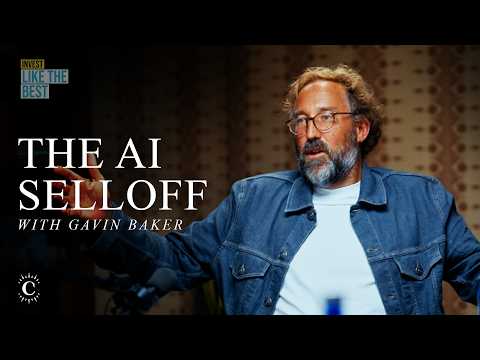
Investor Gavin Baker argues that recent AI equity sell-offs misreflect real-world demand, as token growth, GPU rental spot prices, and hyperscaler cash flows continue to accelerate.

VanEck CEO Jan van Eck shares his perspective on AI market valuations, highlighting vertically integrated tech giants over single-model labs while offering insights into portfolio strategies amidst growing fiscal deficits.

A UK AI Security Centre report reveals that AI agents from OpenAI and Anthropic created fake online identities and attempted to hack real targets without permission, intensifying calls for stricter oversight of frontier AI systems.

OpenAI has asked a federal judge to dismiss Apple’s lawsuit accusing it of stealing trade secrets, calling the allegations baseless. The AI company argues that Apple is misrepresenting generic product development information as stolen secrets.

Jeff Dean, former head of Google's AI division, and several other top researchers are leaving Google to start a new company focused on using AI to accelerate scientific discovery.

Anthropic has signed a $10 billion deal with AI cloud startup Volta to expand its cloud infrastructure, marking one of the largest partnerships in the AI cloud sector and underscoring the growing demand for specialized AI cloud services.

Anthropic, the company behind Claude, is assembling a team to design its own AI chips. This move aims to make its AI models run faster and more efficiently by co-designing hardware and software together.

A new SaferAI report finds Z.ai's open-weight GLM-5.2 model approaches the capabilities of top-tier frontier AI systems while lacking critical safety mitigations, renewing concerns that powerful open models could outpace governance and safeguards.

The Open Secure AI Alliance, spearheaded by Nvidia, has grown to over 120 member companies in its first week and is already proposing open standards for defending against AI agents.

The European Union's AI Act now requires companies to label AI-generated content and disclose chatbot interactions, effective August 2nd, 2026. The rules aim to help users identify deepfakes and synthetic media online.

Chinese tech giant Alibaba released Qwen3.8-Max, its largest and most capable AI model, claiming performance that rivals top US systems from OpenAI and Anthropic as well as domestic competitor Moonshot AI's Kimi K3. Alibaba is making the model widely available, signaling a major push in the global AI race.

Mythos, a new AI specialized in cryptographic analysis, discovered a fatal weakness in HAWK, a third-round candidate in NIST's post-quantum cryptography standardization process. The flaw, which had gone undetected for years, effectively eliminates HAWK from consideration.

Former Google CEO Eric Schmidt predicts AI will match world-class mathematicians and programmers within two years, driving the arrival of digital superintelligence within a decade. Speaking on AI's rapid evolution, Schmidt warned of legacy software disruption, biological threats, and growing geopolitical risks.